PDF · English
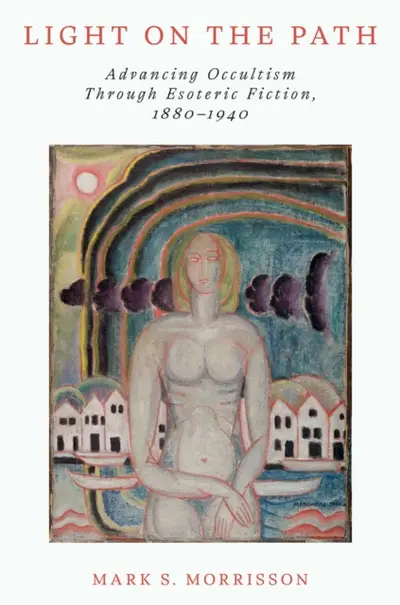
Light on the Path
Advancing Occultism Through Esoteric Fiction, 1880-1940
Price and availability
$72.99
Available in: Andorra, Austria, Australia, Belgium, Bulgaria, Canada, Switzerland, Cyprus, Czechia, Germany, Denmark, Estonia, Spain, Finland, France, United Kingdom, Guernsey, Greece, Croatia, Hungary, Ireland, Isle of Man, Iceland, Italy, Jersey, Japan, Liechtenstein, Lithuania, Luxembourg, Latvia, Monaco, Malta, Netherlands, Norway, Poland, Portugal, Romania, Sweden, Slovenia, Slovakia, San Marino, United States, Vatican City, South Africa
Stores: US, UK, Canada, EU, Australia.
Sign in to buyThe price is re-checked by the server before payment.
For personal use under the eBook licence.
- Format
- DRM
- Not stated by the publisher
- Language
- English
- Publisher
- Oxford University Press
- Published
- 17 November 2025
- ISBN
- 9780197773253
- Subjects
- English, c 1700 to c 1800, c 1800 to c 1900, Literary studies: fiction, novelists & prose writers, Modern history to 20th century: c 1700 to c 1900, Social & cultural history, Occult studies, History of ideas, Mysticism, magic & ritual, 2ACB, 3ML, 3MN, Literary studies: fiction, novelists and prose writers, JBCC9, NH, NHTB, QRYX, Mysticism, magic and alternative spiritual practices
About this book
In the late nineteenth and early twentieth centuries, the US and UK experienced an occult revival, a flourishing "e;occulture"e; that signalled the increasing presence of the occult in the popular imagination. This period also witnessed another major cultural development--a rapid expansion of print culture that offered a dizzying array of new magazines, pulp fiction, cheap single-volume and paperback novels, and emerging forms of genre fiction, all designed to meet (and create) the demands of a growing fiction readership. In Light on the Path, Mark S. Morrisson explores the surprising interdependence of these two phenomena. As supernatural fiction moved in increasingly occult directions, modern occultism itself became so entangled with popular fiction that it can almost be seen as a literary phenomenon. Morrisson recounts the strategic efforts by modern occultists, including Mabel Collins, Aleister Crowley, Dion Fortune, Kenneth Morris, and Talbot Mundy, to use popular fiction to wrest esotericism away from its traditional modes of secrecy and make esoteric experiences of self-transformation widely accessible. Through experiments to forge a new esoteric fiction genre from already existing genres, these occultists intended their novels to open gates for readers, to offer an occult gnosis through the simple act of reading a novel. In so doing, they transformed genre fiction into a tool with which to launch new religious movements that persist today.
Bibliographic data © Gardners Books Ltd.