PDF · English
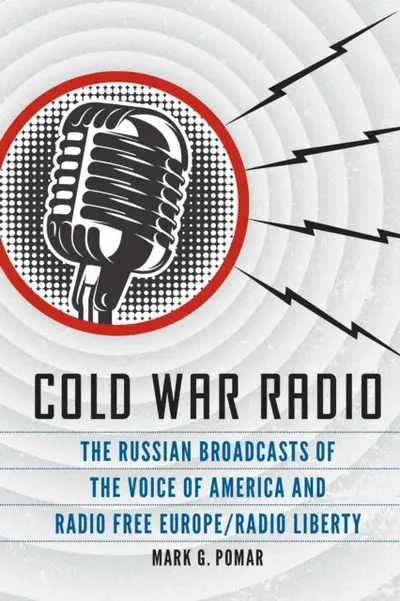
Cold War Radio
The Russian Broadcasts of the Voice of America and Radio Free Europe/Radio Liberty
Price and availability
Not sold in this region
Available in: Andorra, Austria, Australia, Belgium, Bulgaria, Switzerland, Cyprus, Czechia, Germany, Denmark, Estonia, Spain, Finland, France, United Kingdom, Guernsey, Greece, Croatia, Hungary, Ireland, Isle of Man, Iceland, Italy, Jersey, Japan, Liechtenstein, Lithuania, Luxembourg, Latvia, Monaco, Malta, Netherlands, Norway, Poland, Portugal, Romania, Sweden, Slovenia, Slovakia, San Marino, Vatican City, South Africa
Stores: UK, EU, Australia. Not available in the United States store.
This title cannot be bought in this store yet: its supplier terms, territorial rights or price are still being confirmed.
For personal use under the eBook licence.
- Format
- DRM
- Not stated by the publisher
- Language
- English
- Publisher
- University of Nebraska Press
- Published
- 1 October 2022
- ISBN
- 9781640125575
- Subjects
- Russia, USA, Radio, European history, History of the Americas, The Cold War, Media studies, Russia, United States of America, USA, USSR, Soviet Union, Media studies, European history, History of the Americas
About this book
Cold War Radio is a fascinating look at how the United States waged the Cold War through the international broadcasting of Voice of America (VOA) and Radio Free Europe/Radio Liberty (RFE/RL). Mark G. Pomar served in senior positions at VOA and RFE/RL from 1982 to 1993, during which time the Reagan and Bush administrations made VOA and RFE/RL an important part of their foreign policy. VOA is Americas national voice, broadcasting in more than forty languages, and is charged with explaining U.S. government policies and telling Americas story with the aim of gaining the respect and goodwill of its target audience. During the Cold War, the VOA Russian Service broadcast twenty-four hours a day, seven days a week. RFE/RL is a private corporation, funded until 1971 by the CIA and afterward through open congressional appropriations. It broadcast in more than twenty languages of Central and Eastern Europe and Eurasia and functioned as a home service located abroad. Its Russian Service broadcast news, feature programming, and op-eds that would have been part of daily political discourse if Russia had free media. Pomar takes readers inside the two radio stations to show how the broadcasts were conceived and developed and the impact they had on international broadcasting, U.S.-Soviet relations, Russian political and cultural history, and the dissolution of the Soviet Union. Pomar provides nuanced analysis of the broadcasts and sheds light on the multifaceted role the radios played during the Cold War, ranging from instruments of U.S. Cold War policy to repositories of independent Russian culture, literature, philosophy, religion, and the arts.Cold War Radio breaks new ground as Pomar integrates his analysis of Cold War radio programming with the long-term aims of U.S. foreign policy, illuminating the role of radio in the peaceful end of the Cold War.
Bibliographic data © Gardners Books Ltd.