PDF · English
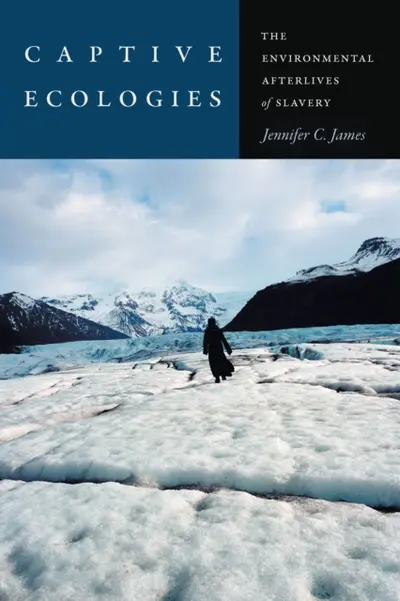
Captive Ecologies
The Environmental Afterlives of Slavery
Price and availability
$40.99
Available in: Andorra, Austria, Australia, Belgium, Bulgaria, Canada, Switzerland, Cyprus, Czechia, Germany, Denmark, Estonia, Spain, Finland, France, United Kingdom, Guernsey, Greece, Croatia, Hungary, Ireland, Isle of Man, Iceland, Italy, Jersey, Japan, Liechtenstein, Lithuania, Luxembourg, Latvia, Monaco, Malta, Netherlands, Norway, Poland, Portugal, Romania, Sweden, Slovenia, Slovakia, San Marino, United States, Vatican City, South Africa
Stores: US, UK, Canada, EU, Australia.
Sign in to buyThe price is re-checked by the server before payment.
For personal use under the eBook licence.
- Format
- DRM
- Not stated by the publisher
- Language
- English
- Publisher
- Duke University Press
- Published
- 6 July 2026
- ISBN
- 9781478062547
- Subjects
- USA, Literature: history & criticism, Literary studies: general, Slavery & abolition of slavery, Ethnic studies, Black & Asian studies, Environmental science, engineering & technology, United States of America, USA, Literature: history and criticism, Literary studies: general, JBSL, NHTS, Environmental science, engineering and technology
About this book
Captive Ecologies makes a case for the ecological significance of slavery's afterlife, tracing the complex entanglements between racial capitalism and Black ecological freedom. Attending to the ways that racial capitalism implicates both captive bodies and captive land, Jennifer C. James brings into relief the harm that racial capitalism does to Black people as well as the human and non-human worlds they inhabit. James looks to a range of case studies and media from the nineteenth, twentieth, and twenty-first centuries, including Black music, ecopoetics, literature, social history, biography, and Black feminist and queer art, tracing the various ways that the environmental stakes of racial capitalism have shaped the Black ecological imagination. In these works, the concept of captivity signals not only slavery but also Black life in the "e;wake"e;: carceral spaces and enclosures, exploitative economic systems, sacrifice zones, and more. James offers novel concepts and frameworks to generate new modes of ecocriticism that are equipped to grapple with the unique demands and stakes of captive ecologies.
Bibliographic data © Gardners Books Ltd.