PDF · English
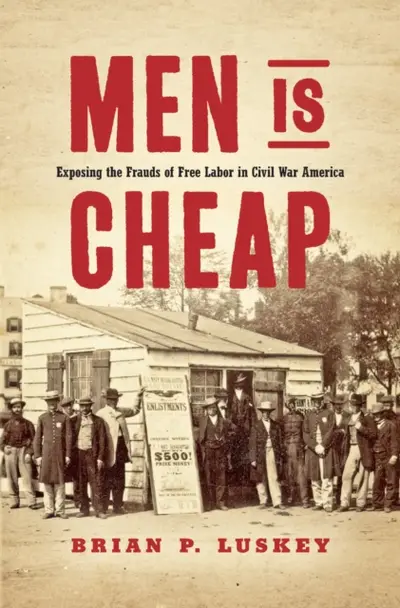
Men Is Cheap
Exposing the Frauds of Free Labor in Civil War America
Price and availability
$155.99
Available in: Andorra, Austria, Australia, Belgium, Bulgaria, Canada, Switzerland, Cyprus, Czechia, Germany, Denmark, Estonia, Spain, Finland, France, United Kingdom, Guernsey, Greece, Croatia, Hungary, Ireland, Isle of Man, Iceland, Italy, Jersey, Japan, Liechtenstein, Lithuania, Luxembourg, Latvia, Monaco, Malta, Netherlands, Norway, Poland, Portugal, Romania, Sweden, Slovenia, Slovakia, San Marino, United States, Vatican City, South Africa
Stores: US, UK, Canada, EU, Australia.
Sign in to buyThe price is re-checked by the server before payment.
For personal use under the eBook licence.
- Format
- DRM
- Not stated by the publisher
- Language
- English
- Publisher
- The University of North Carolina Press
- Published
- 23 March 2020
- ISBN
- 9781469654348
- Subjects
- USA, c 1800 to c 1900, History of the Americas, Modern history to 20th century: c 1700 to c 1900, American Civil War, Labour economics, Personnel & human resources management, Industrial relations, health & safety, Industrial relations, Trade unions, Industrial arbitration & negotiation, United States of America, USA, Labour / income economics, Industrial relations, occupational health and safety, Industrial arbitration and negotiation, Trade unions, History of the Americas
About this book
When a Civil War substitute broker told business associates that Men is cheep here to Day, he exposed an unsettling contradiction at the heart of the Unions war effort. Despite Northerners' devotion to the principles of free labor, the war produced rampant speculation and coercive labor arrangements that many Americans labeled fraudulent. Debates about this contradiction focused on employment agencies called intelligence offices, institutions of dubious character that nevertheless served the military and domestic necessities of the Union army and Northern households. Northerners condemned labor agents for pocketing fees above and beyond contracts for wages between employers and employees. Yet the transactions these middlemen brokered with vulnerable Irish immigrants, Union soldiers and veterans, former slaves, and Confederate deserters defined the limits of independence in the wage labor economy and clarified who could prosper in it.Men Is Cheap shows that in the process of winning the war, Northerners were forced to grapple with the frauds of free labor. Labor brokers, by helping to staff the Union military and Yankee households, did indispensable work that helped the Northern state and Northern employers emerge victorious. They also gave rise to an economic and political system that enriched the managerial class at the expense of laborers a reality that resonates to this day.
Bibliographic data © Gardners Books Ltd.