EPUB · English
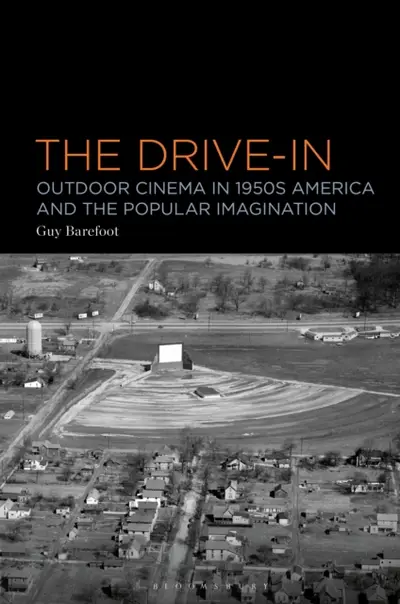
Drive-In
Outdoor Cinema in 1950s America and the Popular Imagination
Price and availability
$35.99
Available in: Andorra, Austria, Australia, Belgium, Bulgaria, Canada, Switzerland, Cyprus, Czechia, Germany, Denmark, Estonia, Spain, Finland, France, United Kingdom, Guernsey, Greece, Croatia, Hungary, Ireland, Isle of Man, Iceland, Italy, Jersey, Japan, Liechtenstein, Lithuania, Luxembourg, Latvia, Monaco, Malta, Netherlands, Norway, Poland, Portugal, Romania, Sweden, Slovenia, Slovakia, San Marino, United States, Vatican City, South Africa
Stores: US, UK, Canada, EU, Australia.
Sign in to buyThe price is re-checked by the server before payment.
For personal use under the eBook licence.
- Format
- EPUB
- DRM
- Not stated by the publisher
- Language
- English
- Publisher
- Bloomsbury Publishing (USA)
- Published
- 16 November 2023
- Pages
- 272
- ISBN
- 9781501365911
- Subjects
- USA, c 1945 to c 2000 (Post-war period), Films, cinema, Film theory & criticism, Postwar 20th century history, from c 1945 to c 2000, History: specific events & topics, Popular culture, United States of America, USA, 3MPQ, ATF, ATFA, JBCC1, NH, NHT
About this book
The Drive-In meaningfully contributes to the complex picture of outdoor cinema that has been central to American culture and to a history of US cinema based on diverse viewing experiences rather than a select number of films. Drive-in cinemas flourished in 1950s America, in some summer weeks to the extent that there were more cinemagoers outdoors than indoors. Often associated with teenagers interested in the drive-in as a 'passion pit' or a venue for exploitation films, accounts of the 1950s American drive-in tend to emphasise their popularity with families with young children, downplaying the importance of a film programme apparently limited to old, low-budget or independent films and characterising drive-in operators as industry outsiders. They retain a hold on the popular imagination. The Drive-In identifies the mix of generations in the drive-in audience as well as accounts that articulate individual experiences, from the drive-in as a dating venue to a segregated space. Through detailed analysis of the film industry trade press, local newspapers and a range of other primary sources including archival records on cinemas and cinema circuits in Arkansas, California, New York State and Texas, this book examines how drive-ins were integrated into local communities and the film industry and reveals the importance and range of drive-in programmes that were often close to that of their indoor neighbours.
Bibliographic data © Gardners Books Ltd.