PDF · English
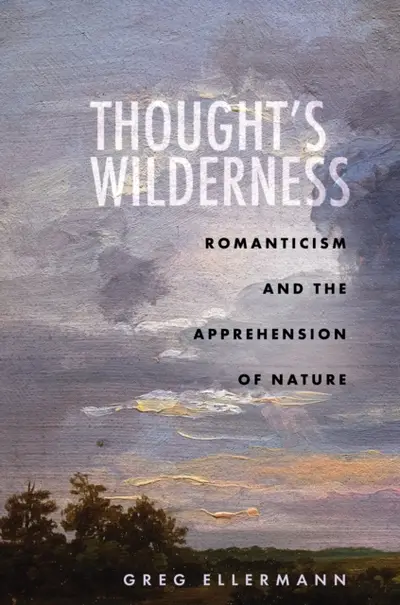
Thought's Wilderness
Romanticism and the Apprehension of Nature
Price and availability
$70.99
Available in: Andorra, Austria, Australia, Belgium, Bulgaria, Canada, Switzerland, Cyprus, Czechia, Germany, Denmark, Estonia, Spain, Finland, France, United Kingdom, Guernsey, Greece, Croatia, Hungary, Ireland, Isle of Man, Iceland, Italy, Jersey, Japan, Liechtenstein, Lithuania, Luxembourg, Latvia, Monaco, Malta, Netherlands, Norway, Poland, Portugal, Romania, Sweden, Slovenia, Slovakia, San Marino, United States, Vatican City, South Africa
Stores: US, UK, Canada, EU, Australia.
Sign in to buyThe price is re-checked by the server before payment.
For personal use under the eBook licence.
- Format
- DRM
- Not stated by the publisher
- Language
- English
- Publisher
- Stanford University Press
- Published
- 6 September 2022
- ISBN
- 9781503633018
- Subjects
- Europe, Literature: history & criticism, Literary studies: general, Literary studies: c 1800 to c 1900, Literary studies: fiction, novelists & prose writers, Literature: history and criticism, Literary studies: general, Literary studies: c 1800 to c 1900, Literary studies: fiction, novelists and prose writers
About this book
While much recent ecocriticism has questioned the value of nature as a concept, Thought's Wilderness insists that it is analytically and politically indispensable, and that romanticism shows us why. Without a concept of nature, Greg Ellermann argues, our thinking is limited to the world that capitalism has made.Defamiliarizing the tradition of romantic nature writing, Ellermann contends that the romantics tried to circumvent the domination of nature that is essential to modern capitalism. As he shows, poets and philosophers in the period such as Immanuel Kant, G. W. F. Hegel, Mary Wollstonecraft, William Wordsworth, and Percy Shelley were highly attuned to nature's ephemeral, ungraspable forms: clouds of vapor, a trace of ruin, deep silence, and the "e;world-surrounding ether."e; Further, he explains how nature's vanishing its vulnerability and its flight from apprehension became a philosophical and political problem. In response to a nascent industrial capitalism, romantic writers developed a poetics of wilderness a poetics that is attentive to fleeting presence and that seeks to let things be. Trying to imagine what ultimately eludes capture, the romantics recognized the complicity between conceptual and economic domination, and they saw how thought itself could become a technology for control. This insight, Ellermann proposes, motivates romantic efforts to think past capitalist instrumentality and its devastation of the world.Ultimately, this new work undertakes a fundamental rethinking of the aesthetics and politics of nature.
Bibliographic data © Gardners Books Ltd.