EPUB · English
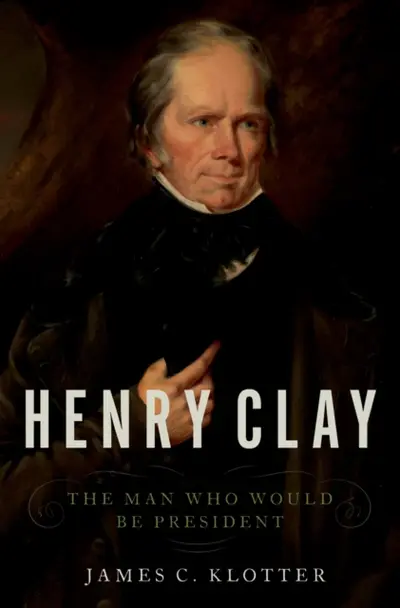
Henry Clay
The Man Who Would Be President
Price and availability
$25.99
Available in: Andorra, Austria, Australia, Belgium, Bulgaria, Canada, Switzerland, Cyprus, Czechia, Germany, Denmark, Estonia, Spain, Finland, France, United Kingdom, Guernsey, Greece, Croatia, Hungary, Ireland, Isle of Man, Iceland, Italy, Jersey, Japan, Liechtenstein, Lithuania, Luxembourg, Latvia, Monaco, Malta, Netherlands, Norway, Poland, Portugal, Romania, Sweden, Slovenia, Slovakia, San Marino, United States, Vatican City, South Africa
Stores: US, UK, Canada, EU, Australia.
Sign in to buyThe price is re-checked by the server before payment.
For personal use under the eBook licence.
- Format
- EPUB
- DRM
- Not stated by the publisher
- Language
- English
- Publisher
- Oxford University Press
- Published
- 2 July 2018
- ISBN
- 9780190498061
- Subjects
- USA, Central Southern states, Modern period, c 1500 onwards, History of the Americas, Archaeology, Politics & government, United States of America, USA, 1KBB-US-S, 3M, Politics and government, NHK, NK
About this book
Charismatic, charming, and one of the best orators of his era, Henry Clay seemed to have it all. He offered a comprehensive plan of change for America, and he directed national affairs as Speaker of the House, as Secretary of State to John Quincy Adams--the man he put in office--and as acknowledged leader of the Whig party. As the broker of the Missouri Compromise and the Compromise of 1850, Henry Clay fought to keep a young nation united when westward expansion and slavery threatened to tear it apart. Yet, despite his talent and achievements, Henry Clay never became president. Three times he received Electoral College votes, twice more he sought his party's nomination, yet each time he was defeated. Alongside fellow senatorial greats Daniel Webster and John C. Calhoun, Clay was in the mix almost every moment from 1824 to 1848. Given his prominence, perhaps the years should be termed not the Jacksonian Era but rather the Age of Clay. James C. Klotter uses new research and offers a more focused, nuanced explanation of Clay's programs and politics in order to answer to the question of why the man they called "e;The Great Rejected"e; never won the presidency but did win the accolades of history. Klotter's fresh outlook reveals that the best monument to Henry Clay is the fact that the United States remains one country, one nation, one example of a successful democracy, still working, still changing, still reflecting his spirit. The appeal of Henry Clay and his emphasis on compromise still resonate in a society seeking less partisanship and more efforts at conciliation.
Bibliographic data © Gardners Books Ltd.