EPUB · English
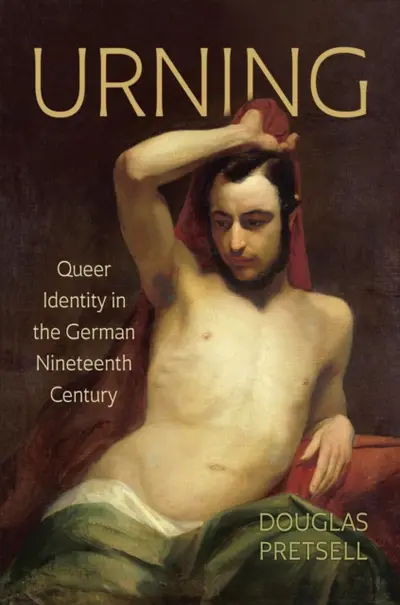
Urning
Queer Identity in the German Nineteenth Century
Price and availability
$89.99
Available in: Andorra, Austria, Australia, Belgium, Bulgaria, Canada, Switzerland, Cyprus, Czechia, Germany, Denmark, Estonia, Spain, Finland, France, United Kingdom, Guernsey, Greece, Croatia, Hungary, Ireland, Isle of Man, Iceland, Italy, Jersey, Japan, Liechtenstein, Lithuania, Luxembourg, Latvia, Monaco, Malta, Netherlands, Norway, Poland, Portugal, Romania, Sweden, Slovenia, Slovakia, San Marino, United States, Vatican City, South Africa
Stores: US, UK, Canada, EU, Australia.
Sign in to buyThe price is re-checked by the server before payment.
For personal use under the eBook licence.
- Format
- EPUB
- DRM
- Not stated by the publisher
- Language
- English
- Publisher
- University of Toronto Press
- Published
- 31 January 2024
- Pages
- 284
- ISBN
- 9781487555610
- Subjects
- Germany, 5SG, European history, Gender studies, gender groups, Gender studies: transsexuals & hermaphroditism, Gay & Lesbian studies, Gay studies (Gay men), 5PSG, JBSF, JBSF3, JBSJ, NHD
About this book
In 1864, the German jurist Karl Heinrich Ulrichs coined the term "e;urning"e; as a word for same-sex attracted men. Over the next few years, first anonymously and then publicly, he campaigned against the public persecution of these men. In response, some of his readers took on the urning terminology for themselves and engaged with Ulrichs to negotiate the finer points of their new identities.In Urning, Douglas Pretsell writes of same-sex attracted men in German-speaking Europe who used the neologism "e;urning"e; as a personal identity in the late nineteenth century. This was in the period before other terms such as "e;homosexual"e; gained currency. Drawing on letters, memoirs, and psychiatric case studies, the book uses first-hand autobiographical accounts to map out the contours of urning society. Urning further explores individual accounts of some urnings who attempted their own forms of activism to transform the world around them , even though they had no formal organization. As the century drew to a close, the efforts of Ulrichs and his urning followers paved the way for the launch of the world's first homosexual rights organization. Urning argues that the men who called themselves urnings were self-identified, self-constructed agents of their own destinies.
Bibliographic data © Gardners Books Ltd.