EPUB · English
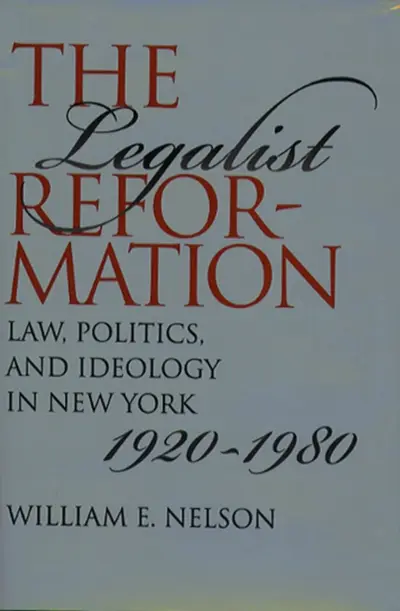
Legalist Reformation
Law, Politics, and Ideology in New York, 1920-1980
Price and availability
$31.99
Available in: Andorra, Austria, Australia, Belgium, Bulgaria, Canada, Switzerland, Cyprus, Czechia, Germany, Denmark, Estonia, Spain, Finland, France, United Kingdom, Guernsey, Greece, Croatia, Hungary, Ireland, Isle of Man, Iceland, Italy, Jersey, Japan, Liechtenstein, Lithuania, Luxembourg, Latvia, Monaco, Malta, Netherlands, Norway, Poland, Portugal, Romania, Sweden, Slovenia, Slovakia, San Marino, United States, Vatican City, South Africa
Stores: US, UK, Canada, EU, Australia.
Sign in to buyThe price is re-checked by the server before payment.
For personal use under the eBook licence.
- Format
- EPUB
- DRM
- Not stated by the publisher
- Language
- English
- Publisher
- The University of North Carolina Press
- Published
- 14 January 2003
- ISBN
- 9780807875568
- Subjects
- USA, New York, 20th century, History of the Americas, 20th century history: c 1900 to c 2000, Social & cultural history, Political science & theory, Legal history, Laws of Specific jurisdictions, United States of America, USA, Legal history, History of the Americas
About this book
Based on a detailed examination of New York case law, this pathbreaking book shows how law, politics, and ideology in the state changed in tandem between 1920 and 1980. Early twentieth-century New York was the scene of intense struggle between white, Anglo-Saxon, Protestant upper and middle classes located primarily in the upstate region and the impoverished, mainly Jewish and Roman Catholic, immigrant underclass centered in New York City. Beginning in the 1920s, however, judges such as Benjamin N. Cardozo, Henry J. Friendly, Learned Hand, and Harlan Fiske Stone used law to facilitate the entry of the underclass into the economic and social mainstream and to promote tolerance among all New Yorkers.Ultimately, says William Nelson, a new legal ideology was created. By the late 1930s, New Yorkers had begun to reconceptualize social conflict not along class lines but in terms of the power of majorities and the rights of minorities. In the process, they constructed a new approach to law and politics. Though doctrinal change began to slow by the 1960s, the main ambitions of the legalist reformation liberty, equality, human dignity, and entrepreneurial opportunity remain the aspirations of nearly all Americans, and of much of the rest of the world, today.
Bibliographic data © Gardners Books Ltd.