EPUB · English
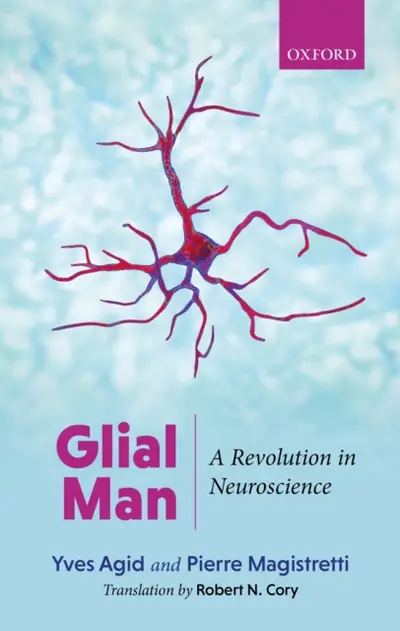
Glial Man
A Revolution in Neuroscience
Price and availability
$36.99
Available in: Andorra, Austria, Australia, Belgium, Bulgaria, Canada, Switzerland, Cyprus, Czechia, Germany, Denmark, Estonia, Spain, Finland, France, United Kingdom, Guernsey, Greece, Croatia, Hungary, Ireland, Isle of Man, Iceland, Italy, Jersey, Japan, Liechtenstein, Lithuania, Luxembourg, Latvia, Monaco, Malta, Netherlands, Norway, Poland, Portugal, Romania, Sweden, Slovenia, Slovakia, San Marino, United States, Vatican City, South Africa
Stores: US, UK, Canada, EU, Australia.
Sign in to buyThe price is re-checked by the server before payment.
For personal use under the eBook licence.
- Format
- EPUB
- DRM
- Not stated by the publisher
- Language
- English
- Publisher
- Oxford University Press
- Published
- 26 November 2020
- ISBN
- 9780192587015
- Subjects
- Physiological & neuro-psychology, biopsychology, Neurology & clinical neurophysiology, Neurosciences, Biochemistry, Physiological psychology, neuropsychology, biopsychology, Neurology and clinical neurophysiology, Neurosciences, Biochemistry
About this book
Glial cells play an essential role in initiating and controlling our behaviours, playing a major role in communication between brain cells. They share certain properties with neurons, including the ability to use information from the environment to formulate behaviors. Understanding these cells is key to explaining human movement, emotion, and thoughts. Moreover, glial cells provide a panoply of new therapeutic targets for the treatment of neuropsychiatric disorders. This book is the 'brain' child of two scientist physicians: Pierre Magistretti, a leading expert in cerebral metabolism and glial cell biology, and Yves Agid, an expert in the treatment of nervous system diseases and a researcher in the field of neurodegenerative diseases. This book provides many examples of the decisive role glial cells play in the functioning of the human brain, as well as in neurological and psychiatric pathologies. The result is a revolution in our understanding of the brain and a beacon of hope in the treatment of neuropsychiatric disorders.
Bibliographic data © Gardners Books Ltd.