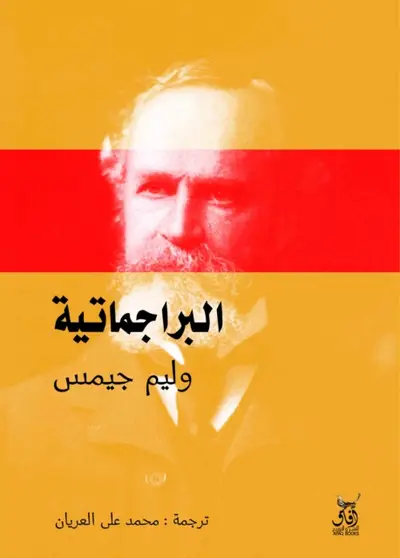
EPUB · Arabic
Pragmatism
Price and availability
$3.99
Available in: Andorra, Austria, Australia, Belgium, Bulgaria, Canada, Switzerland, Cyprus, Czechia, Germany, Denmark, Estonia, Spain, Finland, France, United Kingdom, Guernsey, Greece, Croatia, Hungary, Ireland, Isle of Man, Iceland, Italy, Jersey, Japan, Liechtenstein, Lithuania, Luxembourg, Latvia, Monaco, Malta, Netherlands, Norway, Poland, Portugal, Romania, Sweden, Slovenia, Slovakia, San Marino, United States, Vatican City, South Africa
Stores: US, UK, Canada, EU, Australia.
Sign in to buyThe price is re-checked by the server before payment.
For personal use under the eBook licence.
- Format
- EPUB
- DRM
- Not stated by the publisher
- Language
- Arabic
- Publisher
- Arabookverse International FZC
- Published
- 1 September 2024
- ISBN
- 9789777650311
- Subjects
- Philosophy, Philosophy
About this book
The book "Pragmatism" by the philosopher and pioneer of psychology, William James.His pragmatist doctrine is summed up in his saying, "Our perception of a topic is our perception of the practical effects that may result from this topic and nothing more." Practical philosophy studies reality, not the abstract. The practical philosopher is concerned with the perceived, not the imagined. The practical approach is the approach that explains any meaning by tracing its practical results. The practical doctrine is a doctrine of research, and therefore it is suitable for several philosophies. It is against the idea of the existence of a clear truth or absolute reason. The idea The truthful idea is not the idea that matches reality, but it is the one that leads us directly to the subject we want to know. The idea becomes true when experience proves that it is valid and useful, and truth becomes appropriate in the field of thinking, and goodness becomes appropriate in the field of behavior. Individual benefit is not the criterion for the truthfulness of an idea, but a true idea is one that is compatible with other ideas that have been proven to be true in practice. Ideas are sometimes judged by resorting to the will to believe, where belief in a person's honesty, for example, motivates him to behave honestly.
Bibliographic data © Gardners Books Ltd.