PDF · English
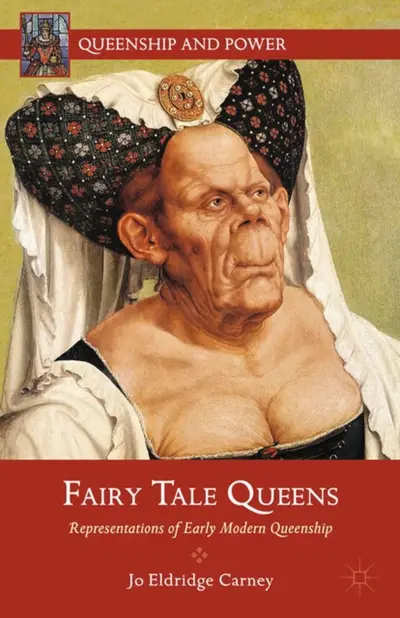
Fairy Tale Queens
Representations of Early Modern Queenship
Price and availability
$60.99
Available in: Andorra, Austria, Australia, Belgium, Bulgaria, Canada, Switzerland, Cyprus, Czechia, Germany, Denmark, Estonia, Spain, Finland, France, United Kingdom, Guernsey, Greece, Croatia, Hungary, Ireland, Isle of Man, Iceland, Italy, Jersey, Japan, Liechtenstein, Lithuania, Luxembourg, Latvia, Monaco, Malta, Netherlands, Norway, Poland, Portugal, Romania, Sweden, Slovenia, Slovakia, San Marino, United States, Vatican City, South Africa
Stores: US, UK, Canada, EU, Australia.
Sign in to buyThe price is re-checked by the server before payment.
For personal use under the eBook licence.
- Format
- DRM
- Not stated by the publisher
- Language
- English
- Publisher
- Palgrave Macmillan US
- Published
- 14 September 2012
- ISBN
- 9781137269690
- Subjects
- Europe, United Kingdom, Great Britain, Western Continental Europe, Modern period, c 1500 onwards, Literature: history & criticism, Literary studies: general, European history, British & Irish history, Modern history to 20th century: c 1700 to c 1900, Social & cultural history, Europe, Western Europe, Literature: history and criticism, History, European history, Social and cultural history
About this book
Most of today's familiar fairy tales come from the stories of Charles Perrault, the Brothers Grimm, and Hans Christian Andersen, but this innovative study encourages us to explore the marvelous tales of authors from the early modern period Giovanni Straparola, Giambattista Basile, Madame Marie-Catherine D'Aulnoy, and others whose works enrich and expand the canon. As author Jo Eldridge Carney shows, the queen is omnipresent in these stories, as much a hallmark of the genre as other familiar characteristics such as the number three, magical objects, and happy endings. That queens occupy such space in early modern tales is not surprising given the profound influence of so many powerful queens in the political landscapes of early modern England and Europe. Carney makes a powerful argument for the historical relevance of fairy tales and, by exploring the dynamic intersection between fictional and actual queens, shows how history and folk literature mutually enrich our understanding of the period.
Bibliographic data © Gardners Books Ltd.