PDF · English
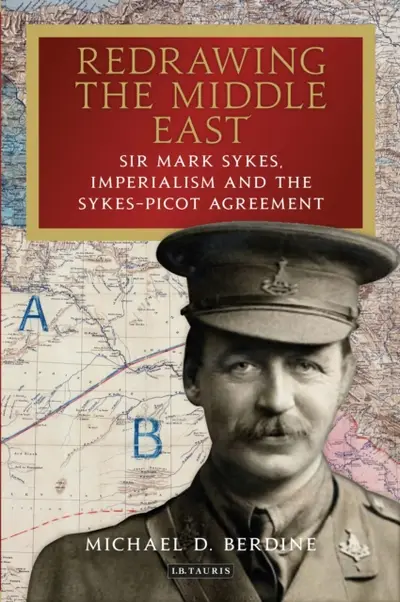
Redrawing the Middle East
Sir Mark Sykes, Imperialism and the Sykes-Picot Agreement
Price and availability
$42.99
Available in: Andorra, Austria, Australia, Belgium, Bulgaria, Canada, Switzerland, Cyprus, Czechia, Germany, Denmark, Estonia, Spain, Finland, France, United Kingdom, Guernsey, Greece, Croatia, Hungary, Ireland, Isle of Man, Iceland, Italy, Jersey, Japan, Liechtenstein, Lithuania, Luxembourg, Latvia, Monaco, Malta, Netherlands, Norway, Poland, Portugal, Romania, Sweden, Slovenia, Slovakia, San Marino, United States, Vatican City, South Africa
Stores: US, UK, Canada, EU, Australia.
Sign in to buyThe price is re-checked by the server before payment.
For personal use under the eBook licence.
- Format
- DRM
- Not stated by the publisher
- Language
- English
- Publisher
- Bloomsbury Publishing
- Published
- 30 March 2018
- Pages
- 328
- ISBN
- 9781786734068
- Subjects
- 20th century, c 1914 to c 1918 (including WW1), Biography: historical, political & military, Middle Eastern history, Colonialism & imperialism, National liberation & independence, post-colonialism, First World War, Conservatism & right-of-centre democratic ideologies, Nationalism, Diplomacy, Geopolitics, Cartography, map-making & projections, 3MP, 3MPBFB, DNBH, Right-of-centre democratic ideologies and movements, Nationalism and nationalist ideologies and movements, Diplomacy, Geopolitics, NHG, NHTQ, NHTR, NHWR5, Cartography, map-making and projections
About this book
The Sykes-Picot Agreement was one of the defining moments in the history of the modern Middle East. Yet its co-creator, Sir Mark Sykes, had far more involvement in British Middle East strategy during World War I than the Agreement for which he is now most remembered. Between 1915 and 1916, Sykes was Lord Kitchener's agent at home and abroad, operating out of the War Office until the war secretary's death at sea in 1916. Following that, from 1916 to 1919 he worked at the Imperial War Cabinet, the War Cabinet Secretariat and, finally, as an advisorto the Foreign Office. The full extent of Sykes's work and influence has previously not been told. Moreover, the general impression given of him is at variance with the facts. Sykes led the negotiations with the Zionist leadership in the formulation of the Balfour Declaration, which he helped to write, and promoted their cause to achieve what he sought for a pro-British post-war Middle East peace settlement, although he was not himself a Zionist. Likewise, despite claims he championed the Arab cause, there is little proof of this other than general rhetoric mainly for public consumption. On the contrary, there is much evidence he routinely exhibited a complete lack of empathy with the Arabs. In this book, Michael Berdine examines the life of this impulsive and headstrong young British aristocrat who helped formulate many of Britain's policies in the Middle East that are responsible for much of the instability that has affected the region ever since.
Bibliographic data © Gardners Books Ltd.