EPUB · English
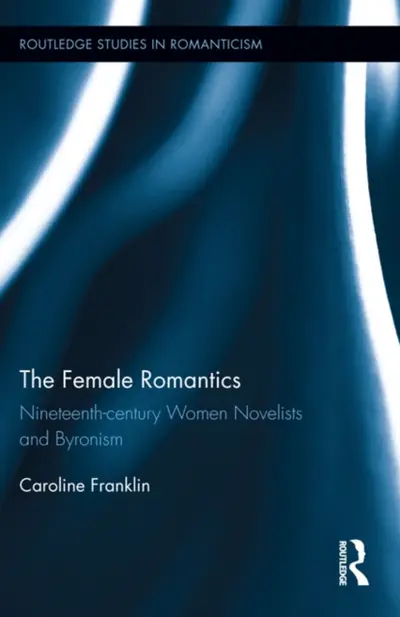
Female Romantics
Nineteenth-century Women Novelists and Byronism
Price and availability
$75.99
Available in: Andorra, Austria, Australia, Belgium, Bulgaria, Canada, Switzerland, Cyprus, Czechia, Germany, Denmark, Estonia, Spain, Finland, France, United Kingdom, Guernsey, Greece, Croatia, Hungary, Ireland, Isle of Man, Iceland, Italy, Jersey, Japan, Liechtenstein, Lithuania, Luxembourg, Latvia, Monaco, Malta, Netherlands, Norway, Poland, Portugal, Romania, Sweden, Slovenia, Slovakia, San Marino, United States, Vatican City, South Africa
Stores: US, UK, Canada, EU, Australia.
Sign in to buyThe price is re-checked by the server before payment.
For personal use under the eBook licence.
- Format
- EPUB
- DRM
- Not stated by the publisher
- Language
- English
- Publisher
- Taylor & Francis
- Published
- 10 September 2012
- ISBN
- 9781136245510
- Subjects
- United Kingdom, Great Britain, Literary studies: general, Literary studies: c 1800 to c 1900, Literary studies: fiction, novelists & prose writers, Gender studies: women, Literary studies: c 1800 to c 1900
About this book
Awarded the Elma Dangerfield Prize by the International Byron Society in 2013The nineteenth century is sometimes seen as a lacuna between two literary periods. In terms of women's writing, however, the era between the death of Mary Wollstonecraft and the 1860s feminist movement produced a coherent body of major works, impelled by an ongoing dialogue between Enlightenment 'feminism' and late Romanticism. This study focuses on the dynamic interaction between Lord Byron and Madame de Stael, Lady Morgan, Mary Shelley and Jane Austen, challenging previous critics' segregation of the male Romantic writers from their female peers. The Romantic movement in general unleashed the creative ambitions of nineteenth-century female novelists, and the public voice of Byron in particular engaged them in transnational issues of political, national and sexual freedom. Byronism had itself been shaped by the poet's incursion onto a literary scene where women readers were dominant and formidable intellectuals such as Madame de Stael were lionized. Byron engaged in rivalrous dialogue with the novels of his female friends and contemporaries, such as Caroline Lamb, Mary Shelley and Jane Austen, whose critiques of Romantic egotism helped prompt his own self-parody in Don Juan. Later Victorian novelists, such as George Sand, the Bronte sisters and Harriet Beecher Stowe, wove their rejection of their childhood attraction to Byronism, and their dawning awareness of the significance for women of Lady Byron's actions, into the feminist fabric of their art.
Bibliographic data © Gardners Books Ltd.