EPUB · English
Grand Tour
Price and availability
$9.99
Available in: Andorra, Austria, Australia, Belgium, Bulgaria, Canada, Switzerland, Cyprus, Czechia, Germany, Denmark, Estonia, Spain, Finland, France, United Kingdom, Guernsey, Greece, Croatia, Hungary, Ireland, Isle of Man, Iceland, Italy, Jersey, Japan, Liechtenstein, Lithuania, Luxembourg, Latvia, Monaco, Malta, Netherlands, Norway, Poland, Portugal, Romania, Sweden, Slovenia, Slovakia, San Marino, United States, Vatican City, South Africa
Stores: US, UK, Canada, EU, Australia.
Sign in to buyThe price is re-checked by the server before payment.
For personal use under the eBook licence.
- Format
- EPUB
- DRM
- Not stated by the publisher
- Language
- English
- Publisher
- Bloomsbury Publishing
- Published
- 17 March 2022
- Pages
- 64
- ISBN
- 9781784424985
- Subjects
- United Kingdom, Great Britain, History of art & design styles: c 1600 to c 1800, British & Irish history, Modern history to 20th century: c 1700 to c 1900, Social & cultural history, Classical Greek & Roman archaeology, Nostalgia: general, AGA, NH, NHD, NHTB, NKD, Nostalgia: general
About this book
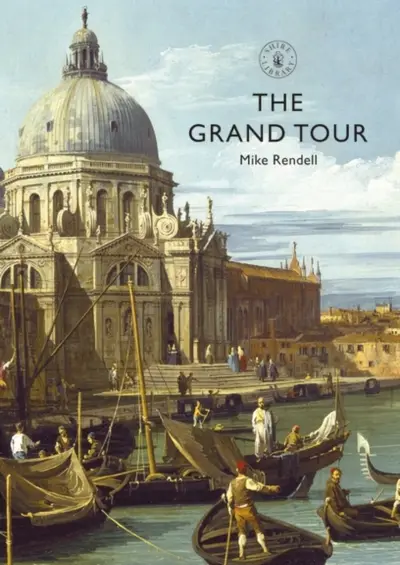
An introduction to the raucous yet educational 'gap year' tours of Europe taken by wealthy British aristocrats in the eighteenth and early nineteenth centuries.For many young eighteenth-century aristocrats, the Grand Tour was an essential rite of passage. Spending many months travelling established routes through France and Italy, they would visit the great cultural sites of western Europe from Paris, through to Venice, Florence and Rome ostensibly absorbing art, architecture and culture. Yet all too often, it was a gateway to gambling and debauchery. In this beautifully illustrated guide, Mike Rendell shows how the tour reached its zenith, examining the young tourists' activities and how they acquired 'polish' and an appreciation for fashion, opera and classical antiquity. He also explores their passion for souvenirs and art collecting, and how these items made their way back to grand country houses, which were themselves often modelled to the rules of classical European architecture.
Bibliographic data © Gardners Books Ltd.