PDF · English
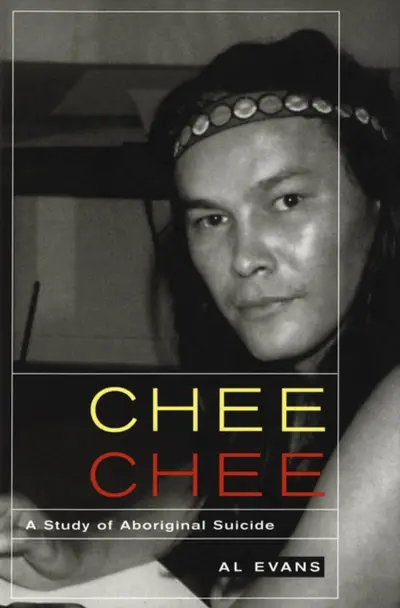
Chee Chee
A Study of Aboriginal Suicide
Price and availability
$31.99
Available in: Andorra, Austria, Australia, Belgium, Bulgaria, Canada, Switzerland, Cyprus, Czechia, Germany, Denmark, Estonia, Spain, Finland, France, United Kingdom, Guernsey, Greece, Croatia, Hungary, Ireland, Isle of Man, Iceland, Italy, Jersey, Japan, Liechtenstein, Lithuania, Luxembourg, Latvia, Monaco, Malta, Netherlands, Norway, Poland, Portugal, Romania, Sweden, Slovenia, Slovakia, San Marino, United States, Vatican City, South Africa
Stores: US, UK, Canada, EU, Australia.
Sign in to buyThe price is re-checked by the server before payment.
For personal use under the eBook licence.
- Format
- DRM
- Not stated by the publisher
- Language
- English
- Publisher
- McGill-Queen's University Press
- Published
- 26 April 2004
- ISBN
- 9780773571785
- Subjects
- North America, Indigenous peoples, Social & cultural anthropology, ethnography, Physical anthropology, Psychology, Human biology, North America (USA and Canada), JBSL11, JHM, Social and cultural anthropology, Psychology, Human biology
About this book
Benjamin Chee Chee lived with anger and frustration for more than thirty years before he took his own life. An Ojibway artist who killed himself just as he was beginning to gain international recognition, Chee Chee is one of the thousands of aboriginal peoples in Canada who have commited suicide. Noted suicidologist and former RCMP officer Al Evans explores Chee Chee's wild, reckless, creative life to reveal how the clash between Native and White society has affected the suicide rate of young Native men and women, now among the highest in the world. Using his in-depth understanding of Native self-destructive behaviour and information from interviews with Chee Chee's mother, close friends, and fellow artists, Evans shows that understanding Benjamin's suicide requires moving beyond psychological analysis to include the damage that contact with White society has caused Native culture, heritage, status, and meaning of life. Evans argues that White society needs to understand these dynamics to be involved in the healing process of Aboriginal peoples in Canada - or to at least avoid hindering their recovery.
Bibliographic data © Gardners Books Ltd.