EPUB · English
Concentration Camps
A Short History
Price and availability
$13.99
Available in: Andorra, Austria, Australia, Belgium, Bulgaria, Canada, Switzerland, Cyprus, Czechia, Germany, Denmark, Estonia, Spain, Finland, France, United Kingdom, Guernsey, Greece, Croatia, Hungary, Ireland, Isle of Man, Iceland, Italy, Jersey, Japan, Liechtenstein, Lithuania, Luxembourg, Latvia, Monaco, Malta, Netherlands, Norway, Poland, Portugal, Romania, Sweden, Slovenia, Slovakia, San Marino, United States, Vatican City, South Africa
Stores: US, UK, Canada, EU, Australia.
Sign in to buyThe price is re-checked by the server before payment.
For personal use under the eBook licence.
- Format
- EPUB
- DRM
- Not stated by the publisher
- Language
- English
- Publisher
- Oxford University Press
- Published
- 23 February 2017
- ISBN
- 9780192508034
- Subjects
- 20th century, 20th century history: c 1900 to c 2000, History: specific events & topics, The Holocaust, Military history, Europe, The Holocaust, Modern warfare, Second World War
About this book
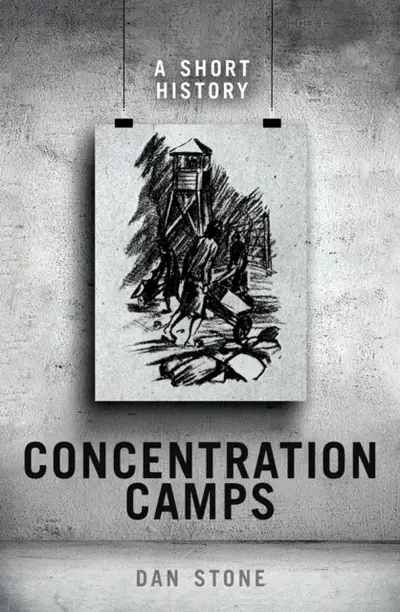
Concentration camps are a relatively new invention, a recurring feature of twentieth century warfare, and one that is important to the modern global consciousness and identity. Although the most famous concentration camps are those under the Nazis, the use of concentration camps originated several decades before the Third Reich, in the Philippines and in the Boer War, and they have been used again in numerous locations, not least during the genocide in Bosnia. They have become defining symbols of humankind's lowest point and basest acts. In this book, Dan Stone gives a global history of concentration camps, and shows that it is not only "e;mad dictators "e; who have set up camps, but instead all varieties of states, including liberal democracies, that have made use of them. Setting concentration camps against the longer history of incarceration, he explains how the ability of the modern state to control populations led to the creation of this extreme institution. Looking at their emergence and spread around the world, Stone argues that concentration camps serve the purpose, from the point of view of the state in crisis, of removing a section of the population that is perceived to be threatening, traitorous, or diseased. Drawing on contemporary accounts of camps, as well as the philosophical literature surrounding them, Stone considers the story camps tell us about the nature of the modern world as well as about specific regimes.
Bibliographic data © Gardners Books Ltd.