PDF · English
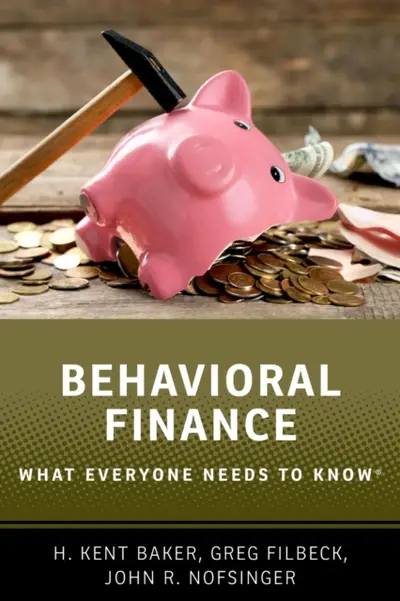
Behavioral Finance
What Everyone Needs to Know(R)
Price and availability
$12.99
Available in: Andorra, Austria, Australia, Belgium, Bulgaria, Canada, Switzerland, Cyprus, Czechia, Germany, Denmark, Estonia, Spain, Finland, France, United Kingdom, Guernsey, Greece, Croatia, Hungary, Ireland, Isle of Man, Iceland, Italy, Jersey, Japan, Liechtenstein, Lithuania, Luxembourg, Latvia, Monaco, Malta, Netherlands, Norway, Poland, Portugal, Romania, Sweden, Slovenia, Slovakia, San Marino, United States, Vatican City, South Africa
Stores: US, UK, Canada, EU, Australia.
Sign in to buyThe price is re-checked by the server before payment.
For personal use under the eBook licence.
- Format
- DRM
- Not stated by the publisher
- Language
- English
- Publisher
- Oxford University Press
- Published
- 1 February 2019
- ISBN
- 9780190868758
- Subjects
- Economic theory & philosophy, Behavioural economics, Popular economics, Finance, Economic theory and philosophy, Behavioural economics, Popular economics, Finance and the finance industry
About this book
People tend to be penny wise and pound foolish and cry over spilt milk, even though we are taught to do neither. Focusing on the present at the expense of the future and basing decisions on lost value are two mistakes common to decision-making that are particularly costly in the world of finance. Behavioral Finance: What Everyone Needs to KnowR provides an overview of common shortcuts and mistakes people make in managing their finances. It covers the common cognitive biases or errors that occur when people are collecting, processing, and interpreting information. These include emotional biases and the influence of social factors, from culture to the behavior of one's peers. These effects vary during one's life, reflecting differences in due to age, experience, and gender. Among the questions to be addressed are: How did the financial crisis of 2007-2008 spur understanding human behavior? What are market anomalies and how do they relate to behavioral biases? What role does overconfidence play in financial decision- making? And how does getting older affect risk tolerance?
Bibliographic data © Gardners Books Ltd.