EPUB · English
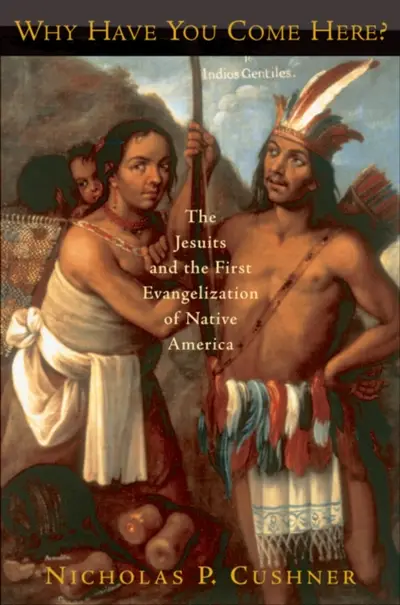
Why Have You Come Here?
The Jesuits and the First Evangelization of Native America
Price and availability
$41.99
Available in: Andorra, Austria, Australia, Belgium, Bulgaria, Canada, Switzerland, Cyprus, Czechia, Germany, Denmark, Estonia, Spain, Finland, France, United Kingdom, Guernsey, Greece, Croatia, Hungary, Ireland, Isle of Man, Iceland, Italy, Jersey, Japan, Liechtenstein, Lithuania, Luxembourg, Latvia, Monaco, Malta, Netherlands, Norway, Poland, Portugal, Romania, Sweden, Slovenia, Slovakia, San Marino, United States, Vatican City, South Africa
Stores: US, UK, Canada, EU, Australia.
Sign in to buyThe price is re-checked by the server before payment.
For personal use under the eBook licence.
- Format
- EPUB
- DRM
- Not stated by the publisher
- Language
- English
- Publisher
- Oxford University Press
- Published
- 3 August 2006
- ISBN
- 9780190294571
- Subjects
- USA, History of the Americas, Early history: c 500 to c 1450/1500, Early modern history: c 1450/1500 to c 1700, History of religion, Christianity, United States of America, USA, NH, NHK, QRAX, QRM
About this book
Christian evangelism was the ostensible motive for much of the early European interaction with the indigenous population of America. The religious orders of the Catholic Church were the front-line representatives of Western culture and the ones who met indigenous America face-to-face. They were also the primary agents of religious change. In this book, Nicholas Cushner provides the first comprehensive overview and analysis of the American missionary activities of the Jesuits. From the North American encounter with the Indians of Florida in 1565, through Mexico, New France, the Paraguay Reductions, Andean Perus, to contact with Native Americans in Maryland on the eve of the American Revolution, members of the order interacted with both native elites and colonizers. Drawing on the abundant documentation of and scholarship about these encounters, Cushner examines how the Jesuits behaved toward the indigenous population and analyzes the way in which native belief systems were replaced by Christianity. He seeks to understand how and why the initial European-Indian encounter changed not only the religion of the natives, but also their material culture, economic activity, social organization, and even their sexual behavior. Always sensitive to the influence of European "e;cultural filters"e; on Jesuit accounts, Cushner attempts as far as possible to discover the authentic voices of the Native Americans with whom they interacted. The result is a fascinating and highly accessible introduction to the earliest colonial encounters in the Americas.
Bibliographic data © Gardners Books Ltd.