PDF · English
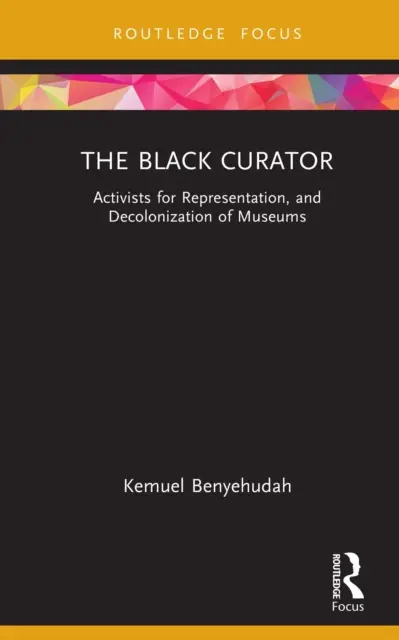
Black Curator
Activists for Representation, and Decolonization of Museums
Price and availability
$29.99
Available in: Andorra, Austria, Australia, Belgium, Bulgaria, Canada, Switzerland, Cyprus, Czechia, Germany, Denmark, Estonia, Spain, Finland, France, United Kingdom, Guernsey, Greece, Croatia, Hungary, Ireland, Isle of Man, Iceland, Italy, Jersey, Japan, Liechtenstein, Lithuania, Luxembourg, Latvia, Monaco, Malta, Netherlands, Norway, Poland, Portugal, Romania, Sweden, Slovenia, Slovakia, San Marino, United States, Vatican City, South Africa
Stores: US, UK, Canada, EU, Australia.
Sign in to buyThe price is re-checked by the server before payment.
For personal use under the eBook licence.
- Format
- DRM
- Not stated by the publisher
- Language
- English
- Publisher
- Taylor & Francis
- Published
- 20 June 2025
- ISBN
- 9781040403068
- Subjects
- USA, Museology & heritage studies, Social & cultural history, Cultural studies, Popular culture, Social discrimination & inequality, Ethnic studies, Black & Asian studies, Sociology, Social work, Medicine, United States of America, USA, History of art, Museology and heritage studies, Ethnic studies / Ethnicity
About this book
The Black Curator highlights the role that Black curators have long played in advocating for black artists and social changes and argues that they made a significant contribution to the democratization of museums over the last 150 years.Drawing on oral testimonies and archival research, this book examines how black curatorial activist practices emerged as a social and imaginative response to racism across various museum contexts. Exploring the work of black curators at three different museums, Benyehudah traces a lineage from black curators in the 19th century to those currently working in curatorial roles. Analysis of these case studies and the use of ideas from museum studies, critical race theory, and art history also enable the author to demonstrate how black curatorial practice was and is distinct from Eurocentric forms of curating black art. Explaining that the black curatorial lens was used in the process of establishing counter archives, the author also demonstrates that it has played - and continues to play - a vital role in the decolonization of museums.Offering compelling ways to look at the relationship between black curators and legacies of colonialism in museums, The Black Curator will be essential reading for scholars, students, and museum practitioners.
Bibliographic data © Gardners Books Ltd.