PDF · English
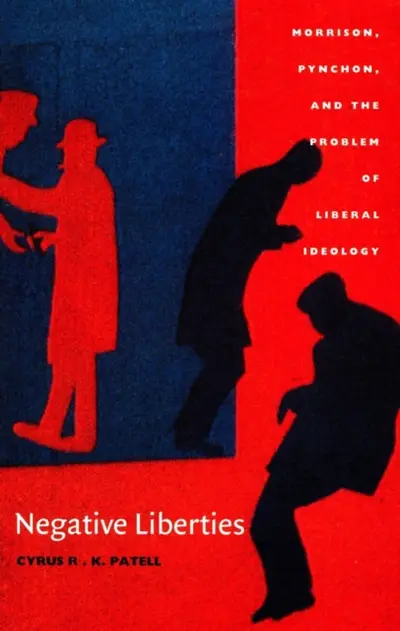
Negative Liberties
Morrison, Pynchon, and the Problem of Liberal Ideology
Price and availability
$47.99
Available in: Andorra, Austria, Australia, Belgium, Bulgaria, Canada, Switzerland, Cyprus, Czechia, Germany, Denmark, Estonia, Spain, Finland, France, United Kingdom, Guernsey, Greece, Croatia, Hungary, Ireland, Isle of Man, Iceland, Italy, Jersey, Japan, Liechtenstein, Lithuania, Luxembourg, Latvia, Monaco, Malta, Netherlands, Norway, Poland, Portugal, Romania, Sweden, Slovenia, Slovakia, San Marino, United States, Vatican City, South Africa
Stores: US, UK, Canada, EU, Australia.
Sign in to buyThe price is re-checked by the server before payment.
For personal use under the eBook licence.
- Format
- DRM
- Not stated by the publisher
- Language
- English
- Publisher
- Duke University Press
- Published
- 28 May 2001
- ISBN
- 9780822380672
- Subjects
- USA, American English, Literary studies: from c 1900 -, Literary studies: fiction, novelists & prose writers, Regional studies, United States of America, USA, 2ACBK, Literary studies: c 1900 to c 2000, Literary studies: fiction, novelists and prose writers, History of scholarship (principally of social sciences and humanities)
About this book
Since the nineteenth century, ideas centered on the individual, on Emersonian self-reliance, and on the right of the individual to the pursuit of happiness have had a tremendous presence in the United States-and even more so after the Reagan era. But has this presence been for the good of all? In Negative Liberties Cyrus R. K. Patell revises important ideas in the debate about individualism and the political theory of liberalism. He does so by adding two new voices to the current discussion-Toni Morrison and Thomas Pynchon-to examine the different ways in which their writings embody, engage, and critique the official narrative generated by U.S. liberal ideology.Pynchon and Morrison reveal the official narrative of individualism as encompassing a complex structure of contradiction held in abeyance. This narrative imagines that the goals of the individual are not at odds with the goals of the family or society and in fact obscures the existence of an unholy truce between individual liberty and forms of oppression. By bringing these two fiction writers into a discourse dominated by Ralph Waldo Emerson, Isaiah Berlin, John Rawls, George Kateb, Robert Bellah, and Michael Sandel, Patell unmasks the ways in which contemporary U.S. culture has not fully shed the oppressive patterns of reasoning handed down by the slaveholding culture from which American individualism emerged.With its interdisciplinary approach, Negative Liberties will appeal to students and scholars of American literature, culture, sociology, and politics.
Bibliographic data © Gardners Books Ltd.