EPUB · English
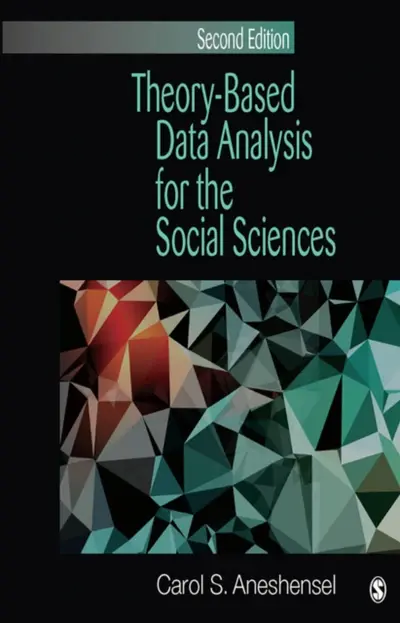
Theory-Based Data Analysis for the Social Sciences
Price and availability
$77.99
Available in: Andorra, Austria, Australia, Belgium, Bulgaria, Canada, Switzerland, Cyprus, Czechia, Germany, Denmark, Estonia, Spain, Finland, France, United Kingdom, Guernsey, Greece, Croatia, Hungary, Ireland, Isle of Man, Iceland, Italy, Jersey, Japan, Liechtenstein, Lithuania, Luxembourg, Latvia, Monaco, Malta, Netherlands, Norway, Poland, Portugal, Romania, Sweden, Slovenia, Slovakia, San Marino, United States, Vatican City, South Africa
Stores: US, UK, Canada, EU, Australia.
Sign in to buyThe price is re-checked by the server before payment.
For personal use under the eBook licence.
- Format
- EPUB
- DRM
- Not stated by the publisher
- Language
- English
- Publisher
- SAGE Publications
- Published
- 11 December 2012
- ISBN
- 9781506320014
- Subjects
- Research methods: general, Social research & statistics, Social research and statistics
About this book
This book presents the elaboration model for the multivariate analysis of observational quantitative data. This model entails the systematic introduction of "e;third variables"e; to the analysis of a focal relationship between one independent and one dependent variable to ascertain whether an inference of causality is justified. Two complementary strategies are used: an exclusionary strategy that rules out alternative explanations such as spuriousness and redundancy with competing theories, and an inclusive strategy that connects the focal relationship to a network of other relationships, including the hypothesized causal mechanisms linking the focal independent variable to the focal dependent variable. The primary emphasis is on the translation of theory into a logical analytic strategy and the interpretation of results. The elaboration model is applied with case studies drawn from newly published research that serve as prototypes for aligning theory and the data analytic plan used to test it; these studies are drawn from a wide range of substantive topics in the social sciences, such as emotion management in the workplace, subjective age identification during the transition to adulthood, and the relationship between religious and paranormal beliefs. The second application of the elaboration model is in the form of original data analysis presented in two Analysis Journals that are integrated throughout the text and implement the full elaboration model. Using real data, not contrived examples, the text provides a step-by-step guide through the process of integrating theory with data analysis in order to arrive at meaningful answers to research questions.
Bibliographic data © Gardners Books Ltd.