PDF · English
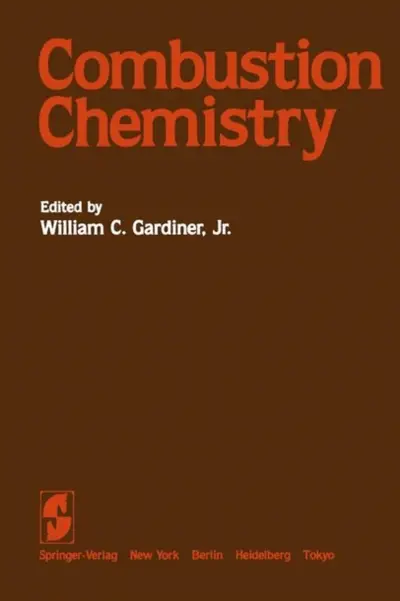
Combustion Chemistry
Price and availability
$60.99
Available in: Andorra, Austria, Australia, Belgium, Bulgaria, Canada, Switzerland, Cyprus, Czechia, Germany, Denmark, Estonia, Spain, Finland, France, United Kingdom, Guernsey, Greece, Croatia, Hungary, Ireland, Isle of Man, Iceland, Italy, Jersey, Japan, Liechtenstein, Lithuania, Luxembourg, Latvia, Monaco, Malta, Netherlands, Norway, Poland, Portugal, Romania, Sweden, Slovenia, Slovakia, San Marino, United States, Vatican City, South Africa
Stores: US, UK, Canada, EU, Australia.
Sign in to buyThe price is re-checked by the server before payment.
For personal use under the eBook licence.
- Format
- DRM
- Not stated by the publisher
- Language
- English
- Publisher
- Springer New York
- Published
- 6 December 2012
- ISBN
- 9781468401868
- Subjects
- Physical chemistry, Industrial chemistry and chemical engineering, Electrical engineering
About this book
Detailed study of the rates and mechanisms of combustion reactions has not been in the mainstream of combustion research until the recent recognition that further progress in optimizing burner performance and reducing pollutant emission can only be done with fundamental understanding of combustion chemistry. This has become apparent at a time when our understanding of the chemistry, at least of small-molecule combustion, and our ability to model combustion processes on large computers have developed to the point that real confidence can be placed in the results. This book is an introduction for outsiders or beginners as well as a reference work for people already active in the field. Because the spectrum of combustion scientists ranges from chemists with little computing experience to engineers who have had only one college chemistry course, everything needed to bring all kinds of beginners up to the level of current practice in detailed combustion modeling is included. It was a temptation to include critical discussions of modeling results and computer programs that would enable outsiders to start quickly into problem solving. We elected not to do either, because we feel that the former are better put into the primary research literature and that people who are going to do combustion modeling should either write their own programs or collaborate with experts. The only exception to this is in the thermochemical area, where programs have been included to do routine fitting operations. For reference purposes there are tables of thermochemical, transport-property, and rate- coefficient data.
Bibliographic data © Gardners Books Ltd.