PDF · English
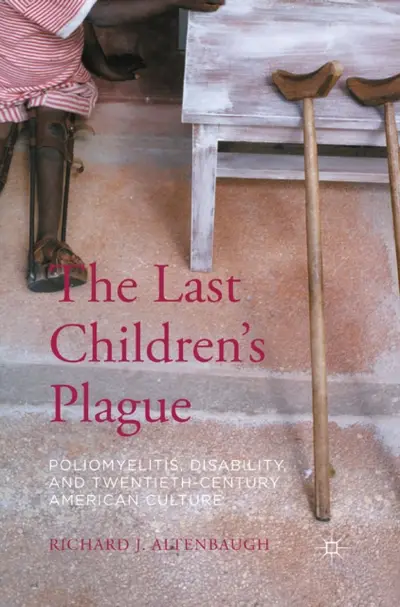
Last Children's Plague
Poliomyelitis, Disability, and Twentieth-Century American Culture
Price and availability
$120.99
Available in: Andorra, Austria, Australia, Belgium, Bulgaria, Canada, Switzerland, Cyprus, Czechia, Germany, Denmark, Estonia, Spain, Finland, France, United Kingdom, Guernsey, Greece, Croatia, Hungary, Ireland, Isle of Man, Iceland, Italy, Jersey, Japan, Liechtenstein, Lithuania, Luxembourg, Latvia, Monaco, Malta, Netherlands, Norway, Poland, Portugal, Romania, Sweden, Slovenia, Slovakia, San Marino, United States, Vatican City, South Africa
Stores: US, UK, Canada, EU, Australia.
Sign in to buyThe price is re-checked by the server before payment.
For personal use under the eBook licence.
- Format
- DRM
- Not stated by the publisher
- Language
- English
- Publisher
- Palgrave Macmillan US
- Published
- 16 September 2015
- ISBN
- 9781137527851
- Subjects
- The Americas, USA, 20th century, History of the Americas, Modern history to 20th century: c 1700 to c 1900, Sociology, Sociology: family & relationships, Medicine: general issues, Health systems & services, Infectious & contagious diseases, Geriatric medicine, Sociology, Sociology: family, kinship and relationships, Medicine / Healthcare: general issues / topics, History, History of the Americas
About this book
Poliomyelitis, better known as polio, thoroughly stumped the medical science community. Polio's impact remained highly visible and sometimes lingered, exacting a priceless physical toll on its young victims and their families as well as transforming their social worlds. This social history of infantile paralysis is plugged into the rich and dynamic developments of the United States during the first half of the twentieth century. Children became epidemic refugees because of anachronistic public health policies and practices. They entered the emerging, clinical world of the hospital, rupturing physical and emotional connections with their parents and siblings. As they underwent rehabilitation, they created ward cultures. They returned home to occasionally find hostile environments and always discover changed relationships due to their disabilities. The changing concept of the child, from an economic asset to an emotional commitment, medical advances, and improved sanitation policies led to significant improvements in child health and welfare. This study, relying on published autobiographies, memoirs, and oral histories, captures the impact of this disease on children's personal lives, encompassing public-health policies, hospitalization, philanthropic and organizational responses, physical therapy, family life, and schooling. It captures the anger, frustration, and terror not only among children but parents, neighbors, and medical professionals alike.
Bibliographic data © Gardners Books Ltd.