PDF · English
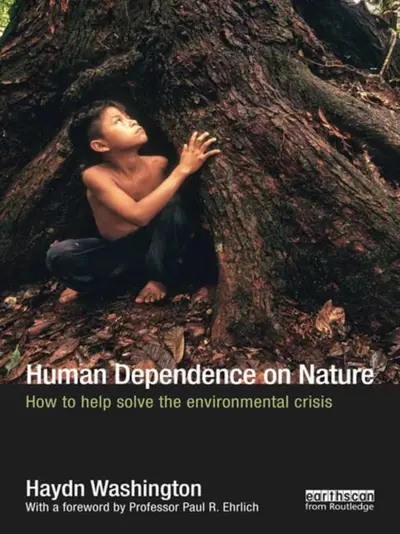
Human Dependence on Nature
How to Help Solve the Environmental Crisis
- Society & social sciences
- Politics & law
- Economics, business & finance
- Nature, environment & geography
- Technology & engineering
- Reference
Price and availability
$68.99
Available in: Andorra, Austria, Australia, Belgium, Bulgaria, Canada, Switzerland, Cyprus, Czechia, Germany, Denmark, Estonia, Spain, Finland, France, United Kingdom, Guernsey, Greece, Croatia, Hungary, Ireland, Isle of Man, Iceland, Italy, Jersey, Japan, Liechtenstein, Lithuania, Luxembourg, Latvia, Monaco, Malta, Netherlands, Norway, Poland, Portugal, Romania, Sweden, Slovenia, Slovakia, San Marino, United States, Vatican City, South Africa
Stores: US, UK, Canada, EU, Australia.
Sign in to buyThe price is re-checked by the server before payment.
For personal use under the eBook licence.
- Format
- DRM
- Not stated by the publisher
- Language
- English
- Publisher
- Taylor & Francis
- Published
- 7 May 2013
- ISBN
- 9781136214608
- Subjects
- Development studies, Environmental economics, Environment law, Environmentalist thought & ideology, Biodiversity, Environmental policy & protocols, Conservation of the environment, Climate change, Alternative & renewable energy sources & technology, Civil engineering, surveying & building, Cognition and cognitive psychology, Applied ecology, Sustainability
About this book
Humanity is dependent on Nature to survive, yet our society largely acts as if this is not the case. The energy that powers our very cells, the nutrients that make up our bodies, the ecosystem services that clean our water and air; these are all provided by the Nature from which we have evolved and of which we are a part. This book examines why we deny or ignore this dependence and what we can do differently to help solve the environmental crisis. Written in an accessible and engaging style, Haydn Washington provides an excellent overview of humanity's relationship with Nature. The book looks at energy flow, nutrient cycling, ecosystem services, ecosystem collapse as well as exploring our psychological and spiritual dependency on nature. It also examines anthropocentrism and denial as causes of our unwillingness to respect our inherent dependence on the natural environment. The book concludes by bringing these issues together and providing a framework for solutions to the environmental crisis.
Bibliographic data © Gardners Books Ltd.