PDF · English
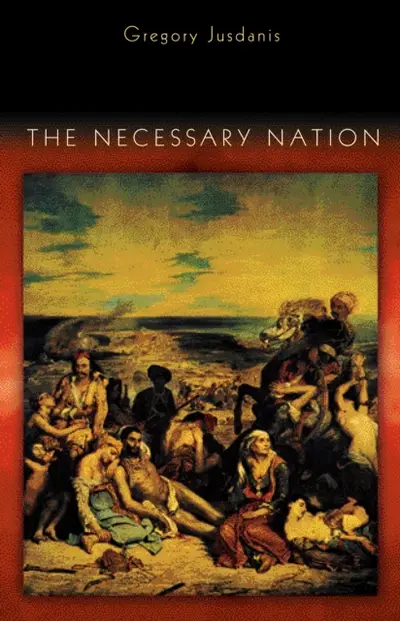
Necessary Nation
Price and availability
$64.99
Available in: Andorra, Austria, Australia, Belgium, Bulgaria, Canada, Switzerland, Cyprus, Czechia, Germany, Denmark, Estonia, Spain, Finland, France, United Kingdom, Guernsey, Greece, Croatia, Hungary, Ireland, Isle of Man, Iceland, Italy, Jersey, Japan, Liechtenstein, Lithuania, Luxembourg, Latvia, Monaco, Malta, Netherlands, Norway, Poland, Portugal, Romania, Sweden, Slovenia, Slovakia, San Marino, United States, Vatican City, South Africa
Stores: US, UK, Canada, EU, Australia.
Sign in to buyThe price is re-checked by the server before payment.
For personal use under the eBook licence.
- Format
- DRM
- Not stated by the publisher
- Language
- English
- Publisher
- Princeton University Press
- Published
- 27 June 2011
- ISBN
- 9781400824151
- Subjects
- European history, Social & political philosophy, Cultural studies, Nationalism, Europe, European history, Social and political philosophy
About this book
In this controversial look at nationalism, Gregory Jusdanis offers a sweeping defense of the nation as a protector of cultural difference and a catalyst for modernization. Since the end of the Cold War, the nation-state has undergone intense scrutiny among critics in the media and the academy. Many believe that civic nationalism may be fruitful but that cultural nationalism fosters xenophobia and backward thinking. Jusdanis, however, emphasizes the positive collaboration between nation-building and culture. Through a series of critical readings of multicultural, postcolonial, and globalization theories, the author reveals how nationalism enables people to defend their distinctive ways of life, to fight colonial oppression, and to build an independent society of citizens. He explains why people over the last two hundred years have politicized their ethnic identities and have sought a union of culture and power within an autonomous nation-state. While seeking to defend nationalism, Jusdanis also examines its potential to unleash extraordinary violence into the world. He thus proposes federalism as a political solution to the challenges posed by nationalism and globalization. Jusdanis applies the tools of disciplines ranging from anthropology to philosophy, as he explores the nation-building projects of numerous and diverse countries around the world. What emerges is a fresh perspective on the subjects of national culture, identity, political nations, globalization, postcolonialism, and diaspora.
Bibliographic data © Gardners Books Ltd.