PDF · English
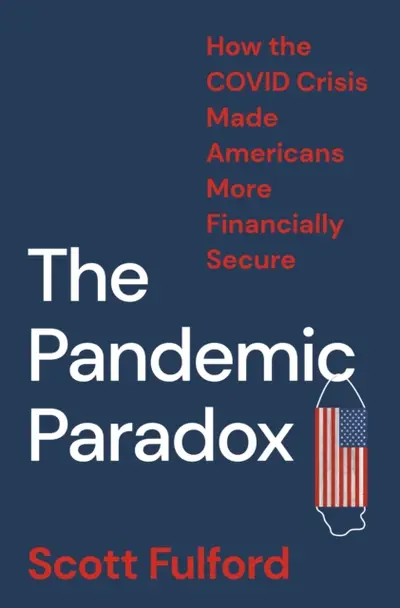
Pandemic Paradox
How the COVID Crisis Made Americans More Financially Secure
Price and availability
$27.99
Available in: Andorra, Austria, Australia, Belgium, Bulgaria, Canada, Switzerland, Cyprus, Czechia, Germany, Denmark, Estonia, Spain, Finland, France, United Kingdom, Guernsey, Greece, Croatia, Hungary, Ireland, Isle of Man, Iceland, Italy, Jersey, Japan, Liechtenstein, Lithuania, Luxembourg, Latvia, Monaco, Malta, Netherlands, Norway, Poland, Portugal, Romania, Sweden, Slovenia, Slovakia, San Marino, United States, Vatican City, South Africa
Stores: US, UK, Canada, EU, Australia.
Sign in to buyThe price is re-checked by the server before payment.
For personal use under the eBook licence.
- Format
- DRM
- Not stated by the publisher
- Language
- English
- Publisher
- Princeton University Press
- Published
- 16 May 2023
- ISBN
- 9780691245348
- Subjects
- Central government policies, Economics, Political economy, Economic history, Finance, Personal finance, United States of America, USA, Economics, Finance and the finance industry, Personal finance
About this book
Why most Americans' finances improved during the worst economic contraction since the Great Depression-and the policy choices that made this possibleIn March 2020, economic and social life across the United States came to an abrupt halt as the country tried to slow the spread of COVID-19. In the worst economic contraction since the Great Depression, twenty-two million people lost their jobs between mid-March and mid-April of 2020. And yet somehow the finances of most Americans improved during the pandemic-savings went up, debts went down, and fewer people had trouble paying their bills. In The Pandemic Paradox, economist Scott Fulford explains this seeming contradiction, describing how the pandemic reshaped the American economy. As Americans grappled with remote work, "e;essential"e; work, and closed schools, three massive pandemic relief bills, starting with the CARES Act on March 27, 2020, managed to protect many of America's most vulnerable.Fulford draws from the Consumer Financial Protection Bureau's "e;Making Ends Meet"e; surveys-which he helped design-to interweave macroeconomic trends in spending, saving, and debt with stories of individual Americans' economic lives during the pandemic. We meet Winona, who quit her job to take care of her children; Marvin, who retired early and worried that his savings wouldn't last; Lisa, whose expenses went up after her grown kids (and their dog) moved back home; and many others. What the statistics and the stories show, Fulford argues, is that a better, fairer, more productive economy is still possible. The success of pandemic relief policy proves that Americans' economic fragility is not an unsolvable problem. But we have to choose to solve it.
Bibliographic data © Gardners Books Ltd.