PDF · English
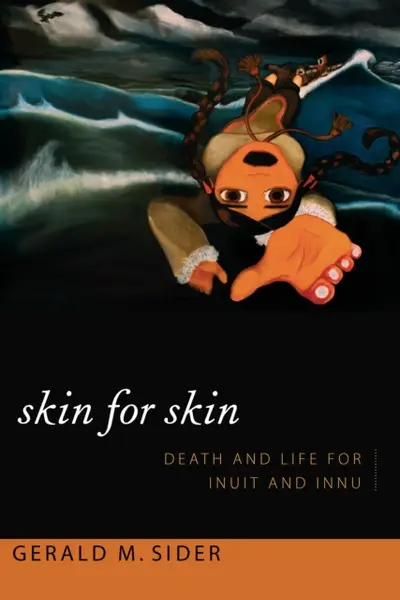
Skin for Skin
Death and Life for Inuit and Innu
Price and availability
$4.99
Available in: Andorra, Austria, Australia, Belgium, Bulgaria, Canada, Switzerland, Cyprus, Czechia, Germany, Denmark, Estonia, Spain, Finland, France, United Kingdom, Guernsey, Greece, Croatia, Hungary, Ireland, Isle of Man, Iceland, Italy, Jersey, Japan, Liechtenstein, Lithuania, Luxembourg, Latvia, Monaco, Malta, Netherlands, Norway, Poland, Portugal, Romania, Sweden, Slovenia, Slovakia, San Marino, United States, Vatican City, South Africa
Stores: US, UK, Canada, EU, Australia.
Sign in to buyThe price is re-checked by the server before payment.
For personal use under the eBook licence.
- Format
- DRM
- Not stated by the publisher
- Language
- English
- Publisher
- Duke University Press
- Published
- 17 February 2014
- Pages
- 312
- ISBN
- 9780822377368
- Subjects
- USA, Social & cultural history, Indigenous peoples, United States of America, USA, JBSL11, NHTB
About this book
Since the 1960s, the Native peoples of northeastern Canada, both Inuit and Innu, have experienced epidemics of substance abuse, domestic violence, and youth suicide. Seeking to understand these transformations in the capacities of Native communities to resist cultural, economic, and political domination, Gerald M. Sider offers an ethnographic analysis of aboriginal Canadians' changing experiences of historical violence. He relates acts of communal self-destruction to colonial and postcolonial policies and practices, as well as to the end of the fur and sealskin trades. Autonomy and dignity within Native communities have eroded as individuals have been deprived of their livelihoods and treated by the state and corporations as if they were disposable. Yet Native peoples' possession of valuable resources provides them with some income and power to negotiate with state and business interests. Sider's assessment of the health of Native communities in the Canadian province of Labrador is filled with potentially useful findings for Native peoples there and elsewhere. While harrowing, his account also suggests hope, which he finds in the expressiveness and power of Native peoples to struggle for a better tomorrow within and against domination.
Bibliographic data © Gardners Books Ltd.