PDF · root
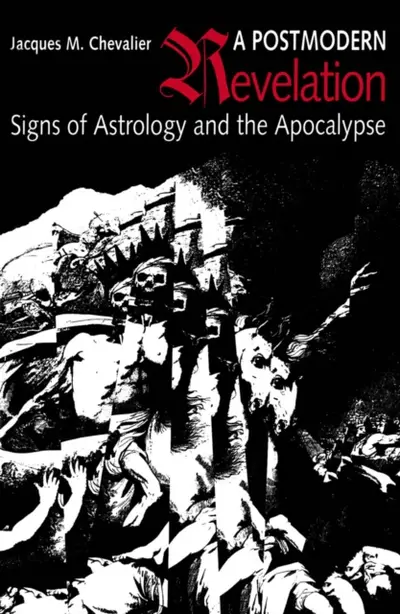
A Postmodern Revelation
Signs of Astrology and the Apocalypse
Price and availability
$51.99
Available in: Andorra, Austria, Australia, Belgium, Bulgaria, Canada, Switzerland, Cyprus, Czechia, Germany, Denmark, Estonia, Spain, Finland, France, United Kingdom, Guernsey, Greece, Croatia, Hungary, Ireland, Isle of Man, Iceland, Italy, Jersey, Japan, Liechtenstein, Lithuania, Luxembourg, Latvia, Monaco, Malta, Netherlands, Norway, Poland, Portugal, Romania, Sweden, Slovenia, Slovakia, San Marino, United States, Vatican City, South Africa
Stores: US, UK, Canada, EU, Australia.
Sign in to buyThe price is re-checked by the server before payment.
For personal use under the eBook licence.
- Format
- DRM
- Not stated by the publisher
- Language
- root
- Publisher
- University of Toronto Press
- Published
- 25 April 1997
- Pages
- 416
- ISBN
- 9781442678651
- Subjects
- Literary theory, Christianity, Mind, Body, Spirit, Astrology, Literary theory, QRM, Mind, body, spirit, Astrology
About this book
In this new interpretation of the Book of Revelation, Jacques M. Chevalier examines the relationship between astromythology and Western interpretation. While scholars have noted the influence of ancient astromythology in Revelation before, Chevalier shows how John's heavenly imagery is the key to a polemical dialogue between modes of storytelling in Western history: astrology and eschatology, and naturalism and logocentrism. The book also explains how the 'genealogical' concerns of modern academia about the origins of natural and cultural history have supplanted the future-oriented visions of sidereal divination and Christian prophecy. The first three chapters and epilogue situate Chevalier's biblical analysis in the context of broader interpretations of astrology and the apocalypse developed by Jung, D.H. Lawrence, LTvi-Strauss, Derrida, Foucault, Cassirer, Adorno, Frye, Barthes, and Morin. They also provide the reader with a solid background in the history of astrological belief systems and exegetic readings of Revelation extending from antiquity to the late twentieth century. The remaining chapters are devoted to two questions. First, how does the imagery in Revelation relate to expressions of astromythology? Second, how do twentieth-century readings of Revelation reflect a 'genealogical' perspective on notions of signs, textuality, and destiny? A Postmodern Revelation is itself an 'apocalypse,' a revelation to scholars interested in sign theory, eschatology, and the history of astrology. The book does far more than interpret the specific biblical text of John's Revelation: it plays with polemics and parallels in the history of Western thought, tracing the history of signs and their meaning from antiquity to a postmodern era that heralds the end of all myths of the End.
Bibliographic data © Gardners Books Ltd.