PDF · English
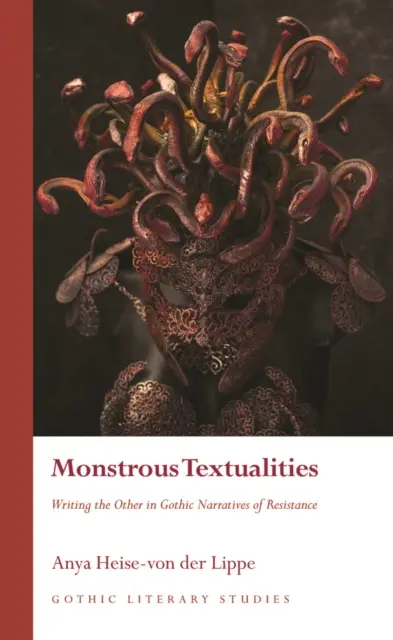
Monstrous Textualities
Writing the Other in Gothic Narratives of Resistance
Price and availability
$94.99
Available in: Andorra, Austria, Australia, Belgium, Bulgaria, Canada, Switzerland, Cyprus, Czechia, Germany, Denmark, Estonia, Spain, Finland, France, United Kingdom, Guernsey, Greece, Croatia, Hungary, Ireland, Isle of Man, Iceland, Italy, Jersey, Japan, Liechtenstein, Lithuania, Luxembourg, Latvia, Monaco, Malta, Netherlands, Norway, Poland, Portugal, Romania, Sweden, Slovenia, Slovakia, San Marino, United States, Vatican City, South Africa
Stores: US, UK, Canada, EU, Australia.
Sign in to buyThe price is re-checked by the server before payment.
For personal use under the eBook licence.
- Format
- DRM
- Not stated by the publisher
- Language
- English
- Publisher
- University of Wales Press
- Published
- 15 June 2021
- ISBN
- 9781786837592
- Subjects
- Literary studies: fiction, novelists and prose writers, Social discrimination and social justice, Mythical, legendary and supernatural beings, monsters and creatures
About this book
Monstrous textuality emerges when Gothic narratives like Frankenstein reflect the monstrous in their narrative structure to create narratives of resistance, and allows writers to meta-narratively reflect their own poetics and textual production, and reclaim authority over their work under circumstances of systemic cultural oppression and Othering. This book traces the representation of other Others through Black feminist hauntology in Toni Morrison's Beloved (1987) and Love (2003); it explores fat freak embodiment as a feminist resistance strategy in Angela Carter's Nights at the Circus (1984) and Margaret Atwood's Lady Oracle (1976); and it reads Atwood's MaddAddam trilogy (2003-13) and Shelley Jackson's Patchwork Girl (1995) within a framework of critical posthumanist and cyborg theory. The result is a comprehensive argument about how these texts can be read within a framework of critical posthumanist questioning of knowledge production, and of epistemological exploration, beyond the exclusionary humanist paradigm.
Bibliographic data © Gardners Books Ltd.