EPUB · English
Antinuclear Citizens
Sustainability Policy and Grassroots Activism in Post-Fukushima Japan
Price and availability
$66.99
Available in: Andorra, Austria, Australia, Belgium, Bulgaria, Canada, Switzerland, Cyprus, Czechia, Germany, Denmark, Estonia, Spain, Finland, France, United Kingdom, Guernsey, Greece, Croatia, Hungary, Ireland, Isle of Man, Iceland, Italy, Jersey, Japan, Liechtenstein, Lithuania, Luxembourg, Latvia, Monaco, Malta, Netherlands, Norway, Poland, Portugal, Romania, Sweden, Slovenia, Slovakia, San Marino, United States, Vatican City, South Africa
Stores: US, UK, Canada, EU, Australia.
Sign in to buyThe price is re-checked by the server before payment.
For personal use under the eBook licence.
- Format
- EPUB
- DRM
- Not stated by the publisher
- Language
- English
- Publisher
- Stanford University Press
- Published
- 27 June 2023
- ISBN
- 9781503635906
- Subjects
- Japan, Social & cultural anthropology, ethnography, Politics & government, Environmental policy & protocols, Social and cultural anthropology, Politics and government, Environmental policy and protocols
About this book
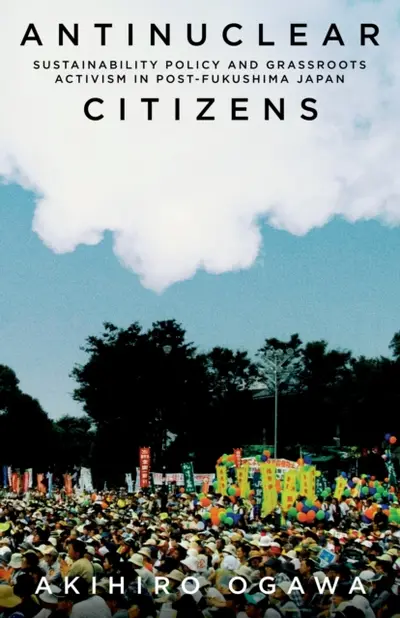
Following the Great East Japan Earthquake on March 11, 2011, tsunamis engulfed the Fukushima Daiichi nuclear power plant located on Japan's Pacific Coast, leading to the worst nuclear disaster the world has seen since the Chernobyl crisis of 1986. Prior to this disaster, Japan had the third largest commercial nuclear program in the world, surpassed only by those in the United States and France-nuclear power significantly contributed to Japan's economic prosperity, and nearly 30% of Japan's electricity was generated by reactors dotted across the archipelago, from northern Hokkaido to southern Kyushu. This long period of institutional stasis was, however, punctuated by the crisis of March 11, which became a critical juncture for Japanese nuclear policymaking. As Akihiro Ogawa argues, the primary agent for this change is what he calls "e;antinuclear citizens"e;- a conscientious Japanese public who envision a sustainable life in a nuclear-free society. Drawing on over a decade of ethnographic research conducted across Japan-including antinuclear rallies, meetings with bureaucrats, and at renewable energy production sites-Ogawa presents an historical record of ordinary people's actions as they sought to survive and navigate a new reality post-Fukushima. Ultimately, Ogawa argues that effective sustainability efforts require collaborations that are grounded in civil society and challenge hegemonic ideology, efforts that reimagine societies and landscapes-especially those dominated by industrial capitalism-to help build a productive symbiosis between industry and sustainability.
Bibliographic data © Gardners Books Ltd.