PDF · English
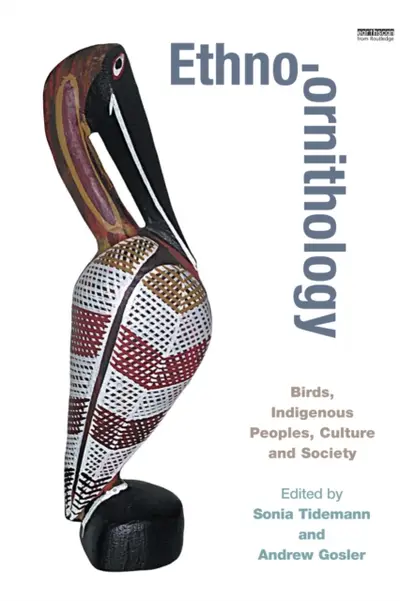
Ethno-ornithology
Birds, Indigenous Peoples, Culture and Society
Price and availability
$75.99
Available in: Andorra, Austria, Australia, Belgium, Bulgaria, Canada, Switzerland, Cyprus, Czechia, Germany, Denmark, Estonia, Spain, Finland, France, United Kingdom, Guernsey, Greece, Croatia, Hungary, Ireland, Isle of Man, Iceland, Italy, Jersey, Japan, Liechtenstein, Lithuania, Luxembourg, Latvia, Monaco, Malta, Netherlands, Norway, Poland, Portugal, Romania, Sweden, Slovenia, Slovakia, San Marino, United States, Vatican City, South Africa
Stores: US, UK, Canada, EU, Australia.
Sign in to buyThe price is re-checked by the server before payment.
For personal use under the eBook licence.
- Format
- DRM
- Not stated by the publisher
- Language
- English
- Publisher
- Taylor & Francis
- Published
- 6 August 2012
- ISBN
- 9781136543845
- Subjects
- Social & cultural anthropology, ethnography, Birds (ornithology), Applied ecology, Conservation of the environment, World, Social and cultural anthropology, Zoology: birds (ornithology), Conservation of wildlife and habitats
About this book
Indigenous knowledge that embraces ornithology takes in whole social dimensions that are inter-linked with environmental ethos, conservation and management for sustainability. In contrast, western approaches have tended to reduce knowledge to elemental and material references. This book looks at the significance of indigenous knowledge of birds and their cultural significance, and how these can assist in framing research methods of western scientists working in related areas. As well as its knowledge base, this book provides practical advice for professionals in conservation and anthropology by demonstrating the relationship between mutual respect, local participation and the building of partnerships for the resolution of joint problems. It identifies techniques that can be transferred to different regions, environments and collections, as well as practices suitable for investigation, adaptation and improvement of knowledge exchange and collection in ornithology. The authors take anthropologists and biologists who have been trained in, and largely continue to practise from, a western reductionist approach, along another path - one that presents ornithological knowledge from alternative perspectives, which can enrich the more common approaches to ecological and other studies as well as plans of management for conservation.
Bibliographic data © Gardners Books Ltd.