PDF · English
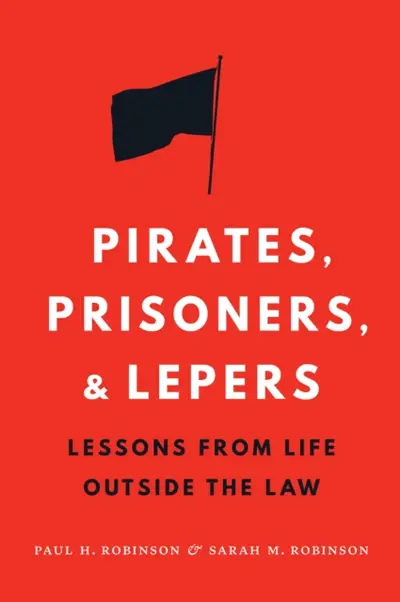
Pirates, Prisoners, and Lepers
Lessons from Life Outside the Law
Price and availability
Not sold in this region
Available in: Andorra, Austria, Australia, Belgium, Bulgaria, Switzerland, Cyprus, Czechia, Germany, Denmark, Estonia, Spain, Finland, France, United Kingdom, Guernsey, Greece, Croatia, Hungary, Ireland, Isle of Man, Iceland, Italy, Jersey, Japan, Liechtenstein, Lithuania, Luxembourg, Latvia, Monaco, Malta, Netherlands, Norway, Poland, Portugal, Romania, Sweden, Slovenia, Slovakia, San Marino, Vatican City, South Africa
Stores: UK, EU, Australia. Not available in the United States store.
This title cannot be bought in this store yet: its supplier terms, territorial rights or price are still being confirmed.
For personal use under the eBook licence.
- Format
- DRM
- Not stated by the publisher
- Language
- English
- Publisher
- University of Nebraska Press
- Published
- 15 July 2015
- ISBN
- 9781612347462
- Subjects
- General & world history, Social & cultural history, Social & cultural anthropology, ethnography, Legal history, Legal history, Social and cultural history
About this book
It has long been held that humans need government to impose social order on a chaotic, dangerous world. How, then, did early humans survive on the Serengeti Plain, surrounded by faster, stronger, and bigger predators in a harsh and forbidding environment? Pirates, Prisoners, and Lepers examines an array of natural experiments and accidents of human history to explore the fundamental nature of how human beings act when beyond the scope of the law. Pirates of the 1700s, the leper colony on Molokai Island, prisoners of the Nazis, hippie communes of the 1970s, shipwreck and plane crash survivors, and many more diverse groups-they all existed in the absence of formal rules, punishments, and hierarchies. Paul and Sarah Robinson draw on these real-life stories to suggest that humans are predisposed to be cooperative, within limits. What these "e;communities"e; did and how they managed have dramatic implications for shaping our modern institutions. Should today's criminal justice system build on people's shared intuitions about justice? Or are we better off acknowledging this aspect of human nature but using law to temper it? Knowing the true nature of our human character and our innate ideas about justice offers a roadmap to a better society.
Bibliographic data © Gardners Books Ltd.