EPUB · English
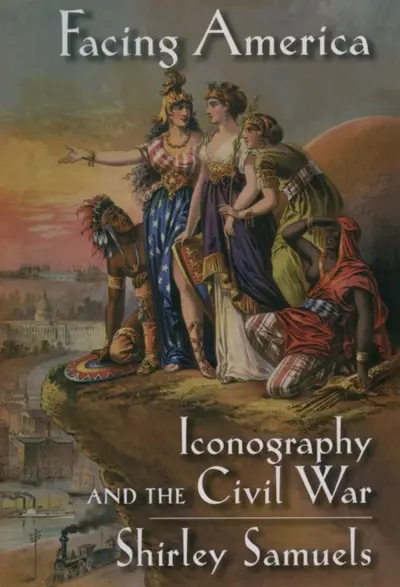
Facing America
Iconography and the Civil War
Price and availability
$81.99
Available in: Andorra, Austria, Australia, Belgium, Bulgaria, Canada, Switzerland, Cyprus, Czechia, Germany, Denmark, Estonia, Spain, Finland, France, United Kingdom, Guernsey, Greece, Croatia, Hungary, Ireland, Isle of Man, Iceland, Italy, Jersey, Japan, Liechtenstein, Lithuania, Luxembourg, Latvia, Monaco, Malta, Netherlands, Norway, Poland, Portugal, Romania, Sweden, Slovenia, Slovakia, San Marino, United States, Vatican City, South Africa
Stores: US, UK, Canada, EU, Australia.
Sign in to buyThe price is re-checked by the server before payment.
For personal use under the eBook licence.
- Format
- EPUB
- DRM
- Not stated by the publisher
- Language
- English
- Publisher
- Oxford University Press
- Published
- 25 March 2004
- ISBN
- 9780190284558
- Subjects
- USA, c 1800 to c 1900, Literary studies: c 1800 to c 1900, Regional studies, History of the Americas, Modern history to 20th century: c 1700 to c 1900, American Civil War, History of ideas, United States of America, USA, 3MN, Literary studies: c 1800 to c 1900, History of scholarship (principally of social sciences and humanities), JBCC9, NH, NHK, NHWR3
About this book
Facing America: Iconography and the Civil War investigates and explains the changing face of America during the Civil War. To conjure a face for the nation, author Shirley Samuels also explores the body of the nation imagined both physically and metaphorically, arguing that the Civil War marks a dramatic shift from identifying the American nation as feminine to identifying it as masculine. Expressions of such a change appear in the allegorical configurations of nineteenth-century American novels, poetry, cartoons, and political rhetoric. Because of the visibility of war's assaults on the male body, masculine vulnerability became such a dominant facet of national life that it practically obliterated the visibility of other vulnerable bodies. The simultaneous advent of photography and the Civil War in the nineteenth century may be as influential as the conjoined rise of the novel and the middle class in the eighteenth century. Both advents herald a changed understanding of how a transformative media can promote new cultural and national identities. Bodies immobilized because of war's practices of wounding and death are also bodies made static for the camera's gaze. The look of shock on the faces of soldiers photographed in order to display their wounds emphasizes the new technology of war literally embodied in the impact of new imploding bullets on vulnerable flesh. Such images mark both the context for and a counterpoint to the "e;look"e; of Walt Whitman as he bends over soldiers in their hospital beds. They also provide a way to interpret the languishing male heroes of novels such as August Evans's Macaria (1864), a southern elegy for the sundering of the nation. This book crucially shows how visual iconography affects the shift in postbellum gendered and racialized identifications of the nation.
Bibliographic data © Gardners Books Ltd.