PDF · English
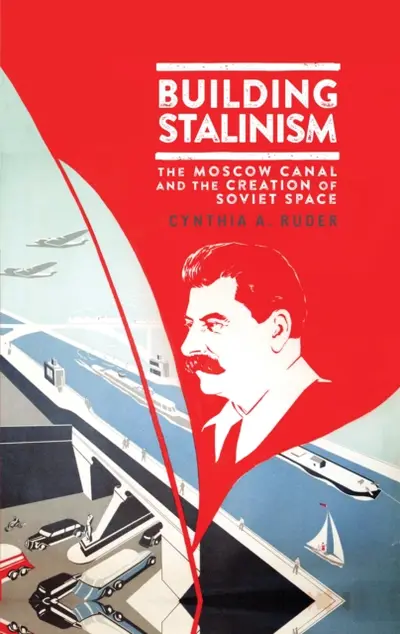
Building Stalinism
The Moscow Canal and the Creation of Soviet Space
- History
- Literary studies & poetry
- Society & social sciences
- Politics & law
- Nature, environment & geography
- Arts, music & film
Price and availability
$42.99
Available in: Andorra, Austria, Australia, Belgium, Bulgaria, Canada, Switzerland, Cyprus, Czechia, Germany, Denmark, Estonia, Spain, Finland, France, United Kingdom, Guernsey, Greece, Croatia, Hungary, Ireland, Isle of Man, Iceland, Italy, Jersey, Japan, Liechtenstein, Lithuania, Luxembourg, Latvia, Monaco, Malta, Netherlands, Norway, Poland, Portugal, Romania, Sweden, Slovenia, Slovakia, San Marino, United States, Vatican City, South Africa
Stores: US, UK, Canada, EU, Australia.
Sign in to buyThe price is re-checked by the server before payment.
For personal use under the eBook licence.
- Format
- DRM
- Not stated by the publisher
- Language
- English
- Publisher
- Bloomsbury Publishing
- Published
- 30 January 2018
- Pages
- 352
- ISBN
- 9781786733566
- Subjects
- Russia, History of art & design styles: from c 1900 -, Memorials, monuments, Films, cinema, Literary studies: general, European history, Social & cultural history, Historical geography, Cultural studies, Sociology, Marxism & Communism, Human geography, AGA, AMG, ATF, Literary studies: general, JBCC, Sociology, Far-left political ideologies and movements, NHD, NHTB, NHTP, Human geography
About this book
Today the 80-mile-long Moscow Canal is a source of leisure for Muscovites, a conduit for tourists and provides the city with more than 60% of its potable water. Yet the past looms heavy over these quotidian activities: the canal was built by Gulag inmates at the height of Stalinism and thousands died in the process.In this wide-ranging book, Cynthia Ruder argues that the construction of the canal physically manifests Stalinist ideology and that the vertical, horizontal, underwater, ideological, artistic and metaphorical spaces created by it resonate with the desire of the state to dominate all space within and outside the Soviet Union. Ruder draws on theoretical constructs from cultural geography and spatial studies to interpret and contextualise a variety of structural and cultural products dedicated to, and in praise of, this signature Stalinist construction project. Approached through an extensive range of archival sources, personal interviews and contemporary documentary materials these include a diverse body of artefacts - from waterways, structures, paintings, sculptures, literary and documentary works, and the Gulag itself. Building Stalinism concludes by analysing current efforts to reclaim the legacy of the canal as a memorial space that ensures that those who suffered and died building it are remembered. This is essential reading for all scholars working on the all-pervasive nature of Stalinism and its complex afterlife in Russia today.
Bibliographic data © Gardners Books Ltd.