EPUB · English
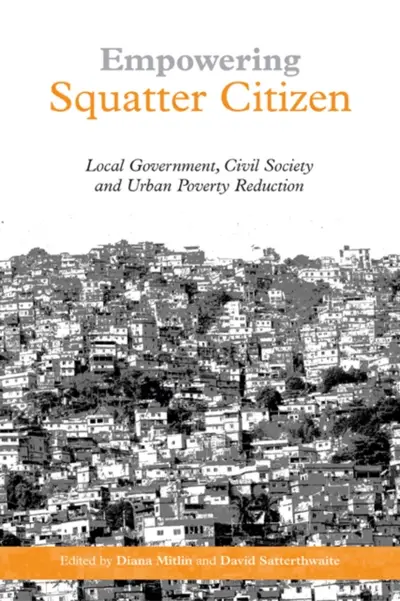
Empowering Squatter Citizen
Local Government, Civil Society and Urban Poverty Reduction
Price and availability
$56.99
Available in: Andorra, Austria, Australia, Belgium, Bulgaria, Canada, Switzerland, Cyprus, Czechia, Germany, Denmark, Estonia, Spain, Finland, France, United Kingdom, Guernsey, Greece, Croatia, Hungary, Ireland, Isle of Man, Iceland, Italy, Jersey, Japan, Liechtenstein, Lithuania, Luxembourg, Latvia, Monaco, Malta, Netherlands, Norway, Poland, Portugal, Romania, Sweden, Slovenia, Slovakia, San Marino, United States, Vatican City, South Africa
Stores: US, UK, Canada, EU, Australia.
Sign in to buyThe price is re-checked by the server before payment.
For personal use under the eBook licence.
- Format
- EPUB
- DRM
- Not stated by the publisher
- Language
- English
- Publisher
- Taylor & Francis
- Published
- 17 June 2013
- ISBN
- 9781136567353
- Subjects
- Developing countries, Development studies, Poverty & unemployment, Urban communities, Urban & municipal planning, Asia, Africa, Latin America – Mexico, Central America, South America, Development studies, Municipal / city government, Urban and municipal planning and policy
About this book
With the rapid growth in urban poverty in Africa, Asia and Latin America, most cities now have 30 to 60 per cent of their population living in shanty towns. The civil and political rights of these people are either ignored or constantly contravened. They face multiple deprivations, including hunger, long hours working for inadequate incomes; illness, injury and premature deaths that arise from dangerous living conditions and inadequate water supplies, sanitation and healthcare. Many face the constant threat of eviction and other forms of violence. None of these problems can be addressed without local changes, and Empowering Squatter Citizen contends that urban poverty is underpinned by the failure of national governments and aid agencies to support local processes. It makes the case for redirecting support to local organizations, whether governmental, non-governmental or grassroots. . The book includes case studies of innovative government organizations (in Thailand, Mexico, Philippines and Nicaragua) and community-driven processes (in India, South Africa, Pakistan and Brazil), which illustrate more effective approaches to urban poverty reduction. Such approaches include strengthening the organizations of the poor and homeless so that they are accountable to their members, are able to develop their own solutions and have more capacity to negotiate with the institutions that are meant to deliver infrastructure, services, credit and land for housing. Such support for local processes is crucial for meeting the Millennium Development Goals in urban areas.
Bibliographic data © Gardners Books Ltd.