EPUB · English
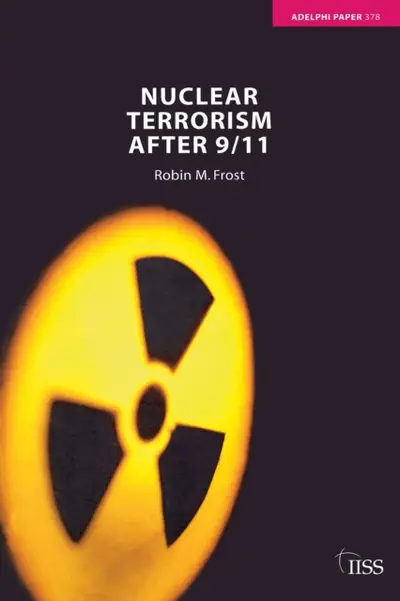
Nuclear Terrorism after 9/11
Price and availability
$51.99
Available in: Andorra, Austria, Australia, Belgium, Bulgaria, Canada, Switzerland, Cyprus, Czechia, Germany, Denmark, Estonia, Spain, Finland, France, United Kingdom, Guernsey, Greece, Croatia, Hungary, Ireland, Isle of Man, Iceland, Italy, Jersey, Japan, Liechtenstein, Lithuania, Luxembourg, Latvia, Monaco, Malta, Netherlands, Norway, Poland, Portugal, Romania, Sweden, Slovenia, Slovakia, San Marino, United States, Vatican City, South Africa
Stores: US, UK, Canada, EU, Australia.
Sign in to buyThe price is re-checked by the server before payment.
For personal use under the eBook licence.
- Format
- EPUB
- DRM
- Not stated by the publisher
- Language
- English
- Publisher
- Taylor & Francis
- Published
- 28 October 2020
- ISBN
- 9781136624261
- Subjects
- Peace studies & conflict resolution, Military history, International relations, Terrorism, armed struggle, Nuclear weapons, Terrorism, armed struggle, Nuclear weapons, Arms trade
About this book
The very mention of nuclear terrorism is enough to rouse strong reactions, and understandably so, because it combines the most terrifying weapons and the most threatening of people in a single phrase. The possibility that terrorists could obtain and use nuclear weapons deserves careful analysis, but discussion has all too often been contaminated with exaggeration, even hysteria. For example, it has been claimed that nuclear terrorism poses an 'existential threat' to the United States.This Adelphi Paper develops a more measured analysis of the risk of terrorists detonating a true fission device. The problem is attacked from two perspectives: the considerable, possibly insurmountable, technical challenges involved in obtaining a functional nuclear weapon, whether 'home-made' or begged, borrowed or stolen from a state arsenal; and the question of the strategic, political and psychological motivations to 'go nuclear'. The conclusions are that nuclear terrorism is a less significant threat than is commonly believed, and that, among terrorists, Muslim extremists are not the most likely to use nuclear weapons.
Bibliographic data © Gardners Books Ltd.