PDF · English
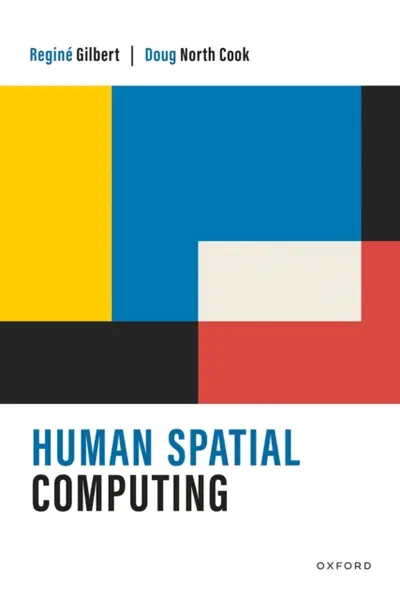
Human Spatial Computing
Price and availability
$33.99
Available in: Andorra, Austria, Australia, Belgium, Bulgaria, Canada, Switzerland, Cyprus, Czechia, Germany, Denmark, Estonia, Spain, Finland, France, United Kingdom, Guernsey, Greece, Croatia, Hungary, Ireland, Isle of Man, Iceland, Italy, Jersey, Japan, Liechtenstein, Lithuania, Luxembourg, Latvia, Monaco, Malta, Netherlands, Norway, Poland, Portugal, Romania, Sweden, Slovenia, Slovakia, San Marino, United States, Vatican City, South Africa
Stores: US, UK, Canada, EU, Australia.
Sign in to buyThe price is re-checked by the server before payment.
For personal use under the eBook licence.
- Format
- DRM
- Not stated by the publisher
- Language
- English
- Publisher
- Oxford University Press
- Published
- 20 February 2026
- ISBN
- 9780192697240
- Subjects
- Ethical & social aspects of IT, Computer science, Virtual reality, User interface design & usability, Digital and information technologies: social and ethical aspects, Virtual reality, User interface design and usability
About this book
Spatial computing encapsulates a range of technologies that embrace the physical world rather than relying solely on a screen. These include approaches such as natural interfaces, haptic feedback, and virtual and augmented reality. Human Spatial Computing takes readers on a journey through this complex world of spatial computing, which is an increasingly important part of modern life. This book explores spatial computing's historical roots and contemporary implications, and highlights its transformative role in significant events, such as the global pandemic, where it proved instrumental in connecting people across distances and adapting to new social norms. It also examines the ethical dimensions surrounding this technology, with a strong emphasis on inclusivity, advocacy, and shared responsibility. Extensively covering topics around privacy, safety, and ethics from different perspectives, this text provides detailed discussions of these subjects to better understand their importance and implications. Accessible to students at undergraduate, graduate, and professional levels, each chapter includes questions for reflection and suggested activities to help apply the concepts, and provides an in-depth view of the practical factors to consider when creating spatial computing experiences. With the evolution of this technology, it's essential to consider the intricacies of making experiences more inclusive and accessible to a broader audience, to ensure a future centred around humanity.
Bibliographic data © Gardners Books Ltd.