PDF · English
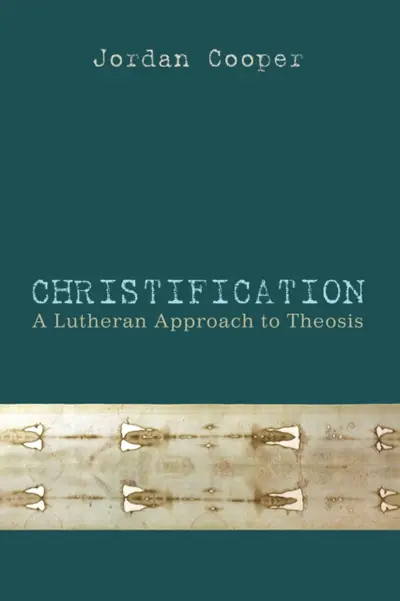
Christification
A Lutheran Approach to Theosis
Price and availability
$25.99
Available in: Andorra, Austria, Australia, Belgium, Bulgaria, Canada, Switzerland, Cyprus, Czechia, Germany, Denmark, Estonia, Spain, Finland, France, United Kingdom, Guernsey, Greece, Croatia, Hungary, Ireland, Isle of Man, Iceland, Italy, Jersey, Japan, Liechtenstein, Lithuania, Luxembourg, Latvia, Monaco, Malta, Netherlands, Norway, Poland, Portugal, Romania, Sweden, Slovenia, Slovakia, San Marino, United States, Vatican City, South Africa
Stores: US, UK, Canada, EU, Australia.
Sign in to buyThe price is re-checked by the server before payment.
For personal use under the eBook licence.
- Format
- DRM
- Not stated by the publisher
- Language
- English
- Publisher
- Wipf and Stock Publishers
- Published
- 18 July 2014
- ISBN
- 9781630873585
- Subjects
- Christian Churches & denominations, Christian theology, Christian institutions & organizations, Christian Churches, denominations, groups
About this book
The doctrine of theosis has enjoyed a recent resurgence among varied theological traditions across the realms of historical, dogmatic, and exegetical theology. In Christification: A Lutheran Approach to Theosis, Jordan Cooper evaluates this teaching from a Lutheran perspective. He examines the teachings of the church fathers, the New Testament, and the Lutheran Confessional tradition in conversation with recent scholarship on theosis. Cooper proposes that the participationist soteriology of the early fathers expressed in terms of theosis is compatible with Luther's doctrine of forensic justification. The historic Lutheran tradition, Scripture, and the patristic sources do not limit soteriological discussions to legal terminology, but instead offer a multifaceted doctrine of salvation that encapsulates both participatory and forensic motifs. This is compared and contrasted with the development of the doctrine of deification in the Eastern tradition arising from the thought of Pseudo-Dionysius. Cooper argues that the doctrine of the earliest fathers--such as Irenaeus, Athanasius, and Justin--is primarily a Christological and economic reality defined as "e;Christification."e; This model of theosis is placed in contradistinction to later Neoplatonic forms of deification.
Bibliographic data © Gardners Books Ltd.