EPUB · English
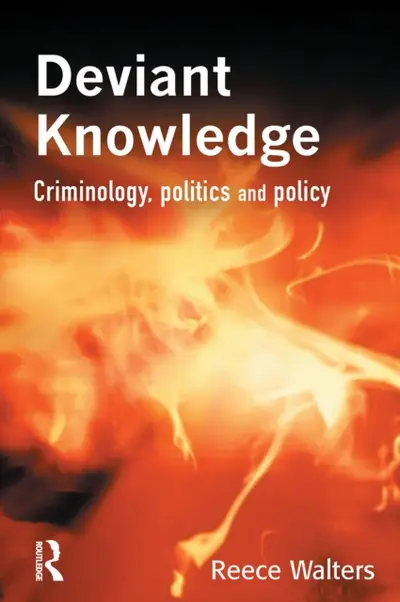
Deviant Knowledge
Price and availability
$59.99
Available in: Andorra, Austria, Australia, Belgium, Bulgaria, Canada, Switzerland, Cyprus, Czechia, Germany, Denmark, Estonia, Spain, Finland, France, United Kingdom, Guernsey, Greece, Croatia, Hungary, Ireland, Isle of Man, Iceland, Italy, Jersey, Japan, Liechtenstein, Lithuania, Luxembourg, Latvia, Monaco, Malta, Netherlands, Norway, Poland, Portugal, Romania, Sweden, Slovenia, Slovakia, San Marino, United States, Vatican City, South Africa
Stores: US, UK, Canada, EU, Australia.
Sign in to buyThe price is re-checked by the server before payment.
For personal use under the eBook licence.
- Format
- EPUB
- DRM
- Not stated by the publisher
- Language
- English
- Publisher
- Taylor & Francis
- Published
- 11 January 2013
- ISBN
- 9781135991463
- Subjects
- Social research & statistics, Crime & criminology, Politics & government, Central government policies, Jurisprudence & general issues, World, Crime and criminology, Public administration / Public policy
About this book
In this important and original book, Reece Walters examines the politics of criminology and the ways in which criminological knowledge is generated. It includes an overview of the politics and practice of conducting criminological research (drawing upon material from Britain, Europe, Australia, New Zealand and the USA), and the ways that regulatory and governing authorities set research agendas, manipulate the processes and production of knowledge and silence or suppress critical voices through various techniques of neutralisation. The book argues for 'knowledges of resistance' - a position that promotes critique, challenges concepts of power and social order, wrestles with notions of truth and adheres to intellectual autonomy and independence. It provides invaluable insights into the relationship between the criminological researcher, public officials and corporate representatives. Drawing upon a wide range of interviews with academics and administrators from government and business, the book provides rare insights into the ways that knowledge about crime and criminal justice is produced and consumed, revealing why certain topics of criminological enquiry are rarely funded and why others receive ongoing political and governmental support. The book will be essential reading for anybody interested in the development of criminological theory and research, and the context and influences that shape it.
Bibliographic data © Gardners Books Ltd.