EPUB · English
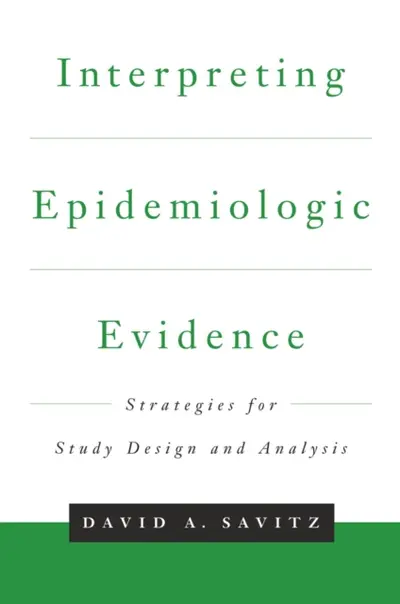
Interpreting Epidemiologic Evidence
Strategies for Study Design & Analysis
Price and availability
$36.99
Available in: Andorra, Austria, Australia, Belgium, Bulgaria, Canada, Switzerland, Cyprus, Czechia, Germany, Denmark, Estonia, Spain, Finland, France, United Kingdom, Guernsey, Greece, Croatia, Hungary, Ireland, Isle of Man, Iceland, Italy, Jersey, Japan, Liechtenstein, Lithuania, Luxembourg, Latvia, Monaco, Malta, Netherlands, Norway, Poland, Portugal, Romania, Sweden, Slovenia, Slovakia, San Marino, United States, Vatican City, South Africa
Stores: US, UK, Canada, EU, Australia.
Sign in to buyThe price is re-checked by the server before payment.
For personal use under the eBook licence.
- Format
- EPUB
- DRM
- Not stated by the publisher
- Language
- English
- Publisher
- Oxford University Press
- Published
- 5 June 2003
- ISBN
- 9780190283100
- Subjects
- Medical research, Epidemiology & medical statistics, Medical research, Epidemiology and Medical statistics
About this book
Evaluating the strength or persuasiveness of epidemiologic evidence is inherently challenging, both for those new to the field and for experienced researchers. There are a myriad of potential biases to consider, but little guidance about how to asses the likely impact on study results. This book offers a strategy for assessing epidemiologic research findings, explicitly describing the goals and products of epidemiologic research in order to better evaluate it successes and limitations. The focus throughout is on practical tools for making optimal use of available data to assess whether hypothesized biases are operative and to anticipate concerns at the point of study design in order to ensure that needed information is generated. Specific tools for assessing the presence and impact of selection bias in both cohort and case-control studies, bias from non-response, confounding, exposure measurement error, disease measurement error, and random error are identified and evaluated. The potential value of each approach as well as its limitations are discussed, using examples from the published literature. Such information should help those who generate and interpret epidemiologic research to apply methodological principles more effectively to substantive issues, leading to a more accurate appraisal of the current evidence and greater clarity about research needs.
Bibliographic data © Gardners Books Ltd.