PDF · English
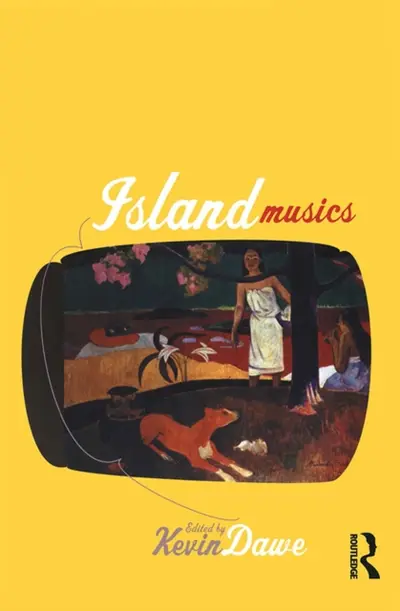
Island Musics
Price and availability
$56.99
Available in: Andorra, Austria, Australia, Belgium, Bulgaria, Canada, Switzerland, Cyprus, Czechia, Germany, Denmark, Estonia, Spain, Finland, France, United Kingdom, Guernsey, Greece, Croatia, Hungary, Ireland, Isle of Man, Iceland, Italy, Jersey, Japan, Liechtenstein, Lithuania, Luxembourg, Latvia, Monaco, Malta, Netherlands, Norway, Poland, Portugal, Romania, Sweden, Slovenia, Slovakia, San Marino, United States, Vatican City, South Africa
Stores: US, UK, Canada, EU, Australia.
Sign in to buyThe price is re-checked by the server before payment.
For personal use under the eBook licence.
- Format
- DRM
- Not stated by the publisher
- Language
- English
- Publisher
- Taylor & Francis
- Published
- 26 May 2020
- ISBN
- 9781000183641
- Subjects
- Theory of music & musicology, Cultural studies, Anthropology, Natural history, World, Global or regional music styles, Cultural studies
About this book
What does the music of Madagascar or Trinidad tell us about the islands themselves and their inhabitants? Is there something unique about island musics? How does island music differ from its mainland counterparts? Drawing on a range of diverse examples from around the globe, this book examines the culture of island music and offers insight into local identities. Case studies look at how music, tradition, popular culture and islander life are linked in modern maritime societies. The islands covered include Crete, Ibiza, Zanzibar, Trinidad, Cuba, Madagascar and Papua New Guinea. In revealing the current practice behind modern island musics, the book considers the role of world music, exotica, global tourism, novels and travel writing in constructing fanciful images of islanders and island life. Island Musics throws into question some of our most basic notions and assumptions about island societies. There are a number of problems common to all island societies that vary in significance depending on an islands size, demographics and its proximity to the mainland. Problems include remoteness and insularity, peripherality to centralized sites of decision-making, a limited range of natural resources, specialization of economics, small markets, a narrow skills base, poor infrastructure and environmental fragility. These issues are discussed in relation to the creation of music in the construction of an islander identity. Of particular interest is the way in which islanders discuss their music and how it articulates the idea of the other and diaspora. Finally, Island Musics considers the musical industry, music education and the preservation of musical cultural heritage.
Bibliographic data © Gardners Books Ltd.