PDF · English
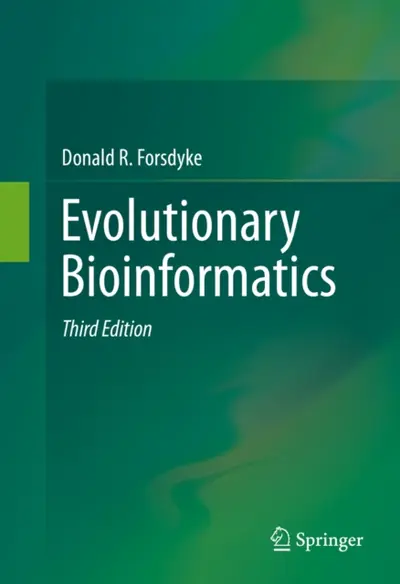
Evolutionary Bioinformatics
Price and availability
$188.99
Available in: Andorra, Austria, Australia, Belgium, Bulgaria, Canada, Switzerland, Cyprus, Czechia, Germany, Denmark, Estonia, Spain, Finland, France, United Kingdom, Guernsey, Greece, Croatia, Hungary, Ireland, Isle of Man, Iceland, Italy, Jersey, Japan, Liechtenstein, Lithuania, Luxembourg, Latvia, Monaco, Malta, Netherlands, Norway, Poland, Portugal, Romania, Sweden, Slovenia, Slovakia, San Marino, United States, Vatican City, South Africa
Stores: US, UK, Canada, EU, Australia.
Sign in to buyThe price is re-checked by the server before payment.
For personal use under the eBook licence.
- Format
- DRM
- Not stated by the publisher
- Language
- English
- Publisher
- Springer International Publishing
- Published
- 27 April 2016
- ISBN
- 9783319287553
- Subjects
- Epidemiology & medical statistics, Medical genetics, Probability & statistics, Science: general issues, Biology, life sciences, Evolution, Biochemistry, Molecular biology, Computer modelling & simulation, Medical genetics, Probability and statistics, Evolution / Evolutionary biology, Computational biology / bioinformatics, Biochemistry
About this book
Now in its third edition and supplemented with more online material, this book aims to make the "e;new"e; information-based (rather than gene-based) bioinformatics intelligible both to the "e;bio"e; people and the "e;info"e; people. Books on bioinformatics have traditionally served gene-hunters, and biologists who wish to construct family trees showing tidy lines of descent. While dealing extensively with the exciting topics of gene discovery and database-searching, such books have hardly considered genomes as information channels through which multiple forms and levels of information have passed through the generations. This new bioinformatics contrasts with the "e;old"e; gene-based bioinformatics that so preoccupies previous texts. Forms of information that we are familiar with (mental, textual) are related to forms with which we are less familiar (hereditary). The book extends a line of evolutionary thought that leads from the nineteenth century (Darwin, Butler, Romanes, Bateson), through the twentieth (Goldschmidt, White), and into the twenty first (the final works of the late Stephen Jay Gould). Long an area of controversy, diverging views may now be reconciled.
Bibliographic data © Gardners Books Ltd.