EPUB · English
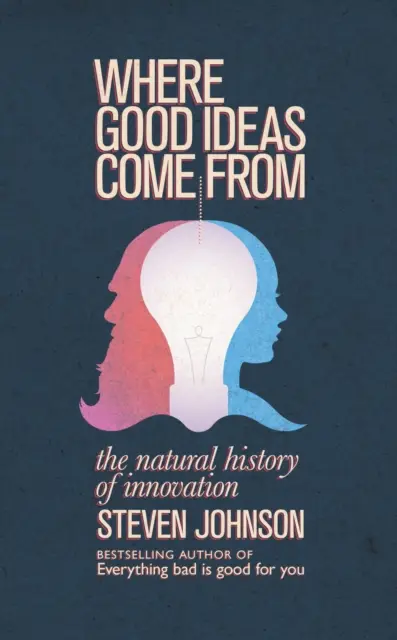
Where Good Ideas Come From
The Natural History of Innovation
Price and availability
Not sold in this region
Available in: Andorra, Austria, Australia, Belgium, Bulgaria, Switzerland, Cyprus, Czechia, Germany, Denmark, Estonia, Spain, Finland, France, United Kingdom, Guernsey, Greece, Croatia, Hungary, Ireland, Isle of Man, Iceland, Italy, Jersey, Liechtenstein, Lithuania, Luxembourg, Latvia, Malta, Netherlands, Norway, Poland, Portugal, Romania, Sweden, Slovenia, Slovakia, San Marino, Vatican City, South Africa
Stores: UK, EU, Australia. Not available in the United States store.
This title cannot be bought in this store yet: its supplier terms, territorial rights or price are still being confirmed.
For personal use under the eBook licence.
- Format
- EPUB
- DRM
- Not stated by the publisher
- Language
- English
- Publisher
- Penguin Books Ltd
- Published
- 7 October 2010
- ISBN
- 9780141964591
- Subjects
- History of ideas, Cognition & cognitive psychology, Business innovation, History of ideas, Business innovation
About this book
Where do good ideas come from? And what do we need to know and do to have more of them? In Where Good Ideas Come From, Steven Johnson, one of our most innovative popular thinkers, explores the secrets of inspiration. Steven Johnson has spent twenty years immersed in creative industries, was active at the dawn of the internet and has a unique perspective that draws on his fluency in fields ranging from neurobiology to new media. Why have cities historically been such hubs of innovation? What do the printing press and Apple have in common? And what does this have to do with the creation and evolution of life itself? Johnson presents the answers to these questions and more in his infectious, culturally omnivoracious style, using examples from thinkers in a range of disciplines - from Charles Darwin to Tim Berners-Lee - to provide the complete, exciting, and encouraging story of inspiration.He identifies the five key principles to the genesis of great ideas, from the cultivation of hunches to the importance of connectivity and how best to make use of new technologies. Most exhilarating is his conclusion: with today's tools and environment, radical innovation is extraordinarily accessible to those who know how to cultivate it. By recognizing where and how patterns of creativity occur - whether within a school, a software platform or a social movement - he shows how we can make more of our ideas good ones.
Bibliographic data © Gardners Books Ltd.