EPUB · English
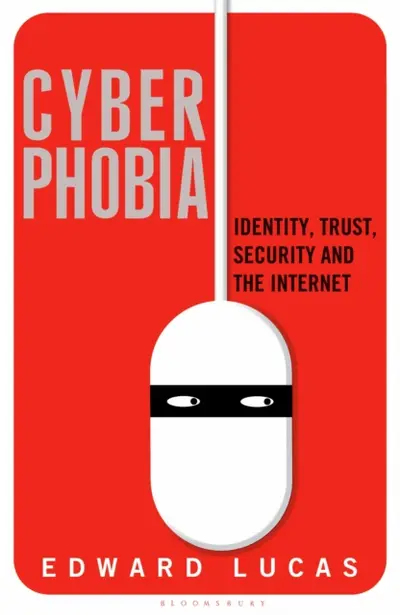
Cyberphobia
Identity, Trust, Security and the Internet
Price and availability
Not sold in this region
Available in: Andorra, Austria, Australia, Belgium, Bulgaria, Switzerland, Cyprus, Czechia, Germany, Denmark, Estonia, Spain, Finland, France, United Kingdom, Guernsey, Greece, Croatia, Hungary, Ireland, Isle of Man, Iceland, Italy, Jersey, Japan, Liechtenstein, Lithuania, Luxembourg, Latvia, Monaco, Malta, Netherlands, Norway, Poland, Portugal, Romania, Sweden, Slovenia, Slovakia, San Marino, Vatican City, South Africa
Stores: UK, EU, Australia. Not available in the United States store.
This title cannot be bought in this store yet: its supplier terms, territorial rights or price are still being confirmed.
For personal use under the eBook licence.
- Format
- EPUB
- DRM
- Not stated by the publisher
- Language
- English
- Publisher
- Bloomsbury Publishing
- Published
- 27 August 2015
- Pages
- 336
- ISBN
- 9781408850138
- Subjects
- Politics & government, Ethical & social aspects of IT, Legal aspects of IT, Network security, Politics and government, Digital and information technologies: social and ethical aspects, Digital and information technologies: Legal aspects, Network security
About this book
Crossing the road, we look both ways. Riding a bicycle at night, we use lights. So why is our attitude towards online security so relaxed? Edward Lucas reveals the ways in which cyberspace is not the secure zone we may hope, how passwords provide no significant obstacle to anyone intent on getting past them, and how anonymity is easily accessible to anyone malign or benign willing to take a little time covering their tracks. The internet was designed by a small group of computer scientists looking for a way to share information quickly. In the last twenty years it has expanded rapidly to become a global information superhighway, available to all comers, but also wide open to those seeking invisibility. This potential for anonymity means neither privacy nor secrecy are really possible for law-abiding corporations or citizens. As identities can be faked so easily the very foundations on which our political, legal and economic systems are based are vulnerable. Businesses, governments, national security organisations and even ordinary individuals are constantly at risk and with our ever increasing dependence on the internet and smart-phone technology this threat is unlikely to diminish in fact, the target for cyber-criminals is expanding all the time.Not only does Cyberphobia lay bare the dangers of the internet, it also explores the most successful defensive cyber-strategies, options for tracking down transgressors and argues that we are moving into a post-digital age where once again face-to-face communication will be the only interaction that really matters.
Bibliographic data © Gardners Books Ltd.