EPUB · English
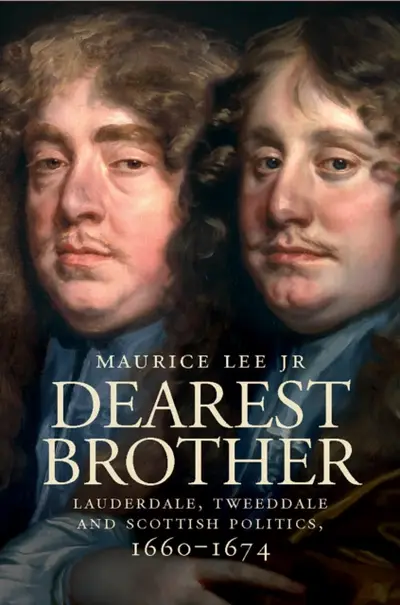
'Dearest Brother'
Lauderdale, Tweedale and Scottish Politics, 1660-1674
Price and availability
Not sold in this region
Available in: Andorra, Austria, Australia, Belgium, Bulgaria, Switzerland, Cyprus, Czechia, Germany, Denmark, Estonia, Spain, Finland, France, United Kingdom, Guernsey, Greece, Croatia, Hungary, Ireland, Isle of Man, Iceland, Italy, Jersey, Japan, Liechtenstein, Lithuania, Luxembourg, Latvia, Monaco, Malta, Netherlands, Norway, Poland, Portugal, Romania, Sweden, Slovenia, Slovakia, San Marino, Vatican City, South Africa
Stores: UK, EU, Australia. Not available in the United States store.
This title cannot be bought in this store yet: its supplier terms, territorial rights or price are still being confirmed.
For personal use under the eBook licence.
- Format
- EPUB
- DRM
- Not stated by the publisher
- Language
- English
- Publisher
- Birlinn Ltd
- Published
- 13 December 2010
- ISBN
- 9781788856010
- Subjects
- United Kingdom, Great Britain, Scotland, c 1600 to c 1700, General & world history, European history, British & Irish history, Early modern history: c 1450/1500 to c 1700, Social & cultural history, Politics & government, European history, Social and cultural history
About this book
This book provides the first detailed account of the course of Scottish politics in the reign of Charles II. It focuses on the years from 1667 to 1673, when, for the only time in the Restoration era, Scottish political leaders were able to make policy for Scotland with minimal interference from London and with Scottish interests chiefly in mind. The key players were the secretary of state, John Maitland, who was earl of Lauderdale and resident at court, and his chief agent in Edinburgh, John Hay, earl of Tweeddale, his first cousin, who became his 'dearest brother' when Tweeddale's son married Lauderdale's daughter. A third indispensible member of the group was Sir Robert Moray, their cousin by marriage, King Charles's fellow chemist and close friend. Together the three inaugurated a programme of reform which had some initial success but in the end foundered on political and personal disagreements. Maurice Lee makes effective use of the unpublished correspondence of the three, among themselves and with others, in telling the melancholy tale of the regime of this triumvirate for the first time.
Bibliographic data © Gardners Books Ltd.