PDF · English
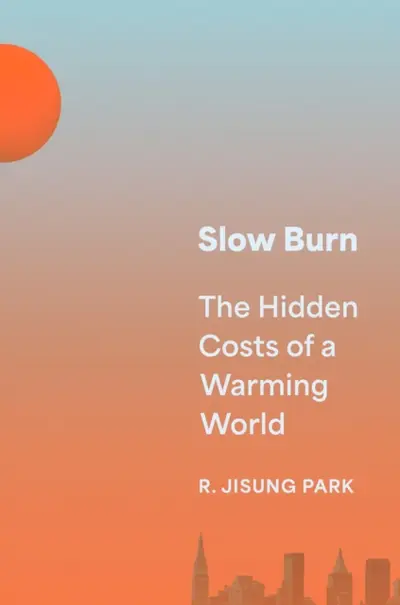
Slow Burn
The Hidden Costs of a Warming World
Price and availability
$21.99
Available in: Andorra, Austria, Australia, Belgium, Bulgaria, Canada, Switzerland, Cyprus, Czechia, Germany, Denmark, Estonia, Spain, Finland, France, United Kingdom, Guernsey, Greece, Croatia, Hungary, Ireland, Isle of Man, Iceland, Italy, Jersey, Japan, Liechtenstein, Lithuania, Luxembourg, Latvia, Monaco, Malta, Netherlands, Norway, Poland, Portugal, Romania, Sweden, Slovenia, Slovakia, San Marino, United States, Vatican City, South Africa
Stores: US, UK, Canada, EU, Australia.
Sign in to buyThe price is re-checked by the server before payment.
For personal use under the eBook licence.
- Format
- DRM
- Not stated by the publisher
- Language
- English
- Publisher
- Princeton University Press
- Published
- 9 April 2024
- ISBN
- 9780691221045
- Subjects
- Microeconomics, Environmental economics, Environmental policy & protocols, Climate change, Social impact of environmental issues, Microeconomics, Environmental economics, Environmental policy and protocols, Climate change, Social impact of environmental issues
About this book
How the subtle but significant consequences of a hotter planet have already begunfrom lower test scores to higher crime ratesand how we might tackle them todayIt's hard not to feel anxious about the problem of climate change, especially if we think of it as an impending planetary catastrophe. In Slow Burn, R. Jisung Park encourages us to view climate change through a different lens: one that focuses less on the possibility of mass climate extinction in a theoretical future, and more on the everyday implications of climate change here and now.Drawing on a wealth of new data and cutting-edge economics, Park shows how climate change headlines often miss some of the most important costs. When wildfires blaze, what happens to people downwind of the smoke? When natural disasters destroy buildings and bridges, what happens to educational outcomes? Park explains how climate change operates as the silent accumulation of a thousand tiny conflagrations: imperceptibly elevated health risks spread across billions of people; pennies off the dollar of productivity; fewer opportunities for upward mobility.By investigating how the physical phenomenon of climate change interacts with social and economic institutions, Park illustrates how climate change already affects everyone, and may act as an amplifier of inequality. Wealthier households and corporations may adapt quickly, but, without targeted interventions, less advantaged communities may not.Viewing climate change as a slow and unequal burn comes with an important silver lining. It puts dollars and cents behind the case for aggressive emissions cuts and helps identify concrete steps that can be taken to better manage its adverse effects. We can begin to overcome our climate anxiety, Park shows us, when we begin to tackle these problems locally.
Bibliographic data © Gardners Books Ltd.