EPUB · English
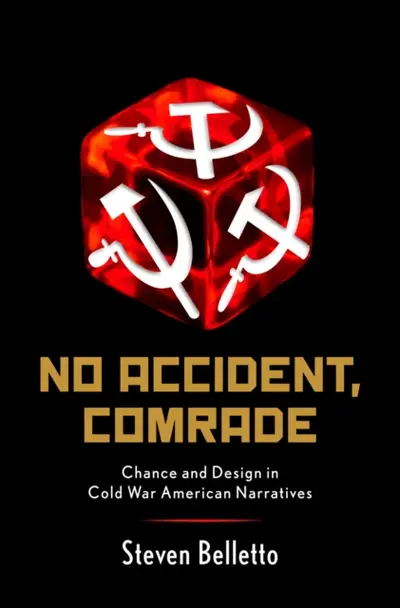
No Accident, Comrade
Chance and Design in Cold War American Narratives
Price and availability
$28.99
Available in: Andorra, Austria, Australia, Belgium, Bulgaria, Canada, Switzerland, Cyprus, Czechia, Germany, Denmark, Estonia, Spain, Finland, France, United Kingdom, Guernsey, Greece, Croatia, Hungary, Ireland, Isle of Man, Iceland, Italy, Jersey, Japan, Liechtenstein, Lithuania, Luxembourg, Latvia, Monaco, Malta, Netherlands, Norway, Poland, Portugal, Romania, Sweden, Slovenia, Slovakia, San Marino, United States, Vatican City, South Africa
Stores: US, UK, Canada, EU, Australia.
Sign in to buyThe price is re-checked by the server before payment.
For personal use under the eBook licence.
- Format
- EPUB
- DRM
- Not stated by the publisher
- Language
- English
- Publisher
- Oxford University Press
- Published
- 28 December 2011
- ISBN
- 9780190208561
- Subjects
- North America, USA, English, Literary studies: from c 1900 -, Literary studies: fiction, novelists & prose writers, The Cold War, North America (USA and Canada), United States of America, USA, 2ACB, Literary studies: c 1900 to c 2000, Literary studies: fiction, novelists and prose writers, NHTW
About this book
No Accident, Comrade argues that chance became a complex yet conflicted cultural signifier during the Cold War, when a range of thinkers--politicians, novelists, historians, biologists, sociologists, and others--contended that totalitarianism denied the very existence and operation of chance in the world. They claimed that the USSR perpetrated a vast fiction on its population, a fiction amplified by the Soviet view that there is no such thing as chance or accident, only manifestations of historical law (hence the popular American refrain used to refer to Marxism: "e;It was no accident, Comrade"e;). By reading an expansive range of American novels published between 1947-2005, alongside nonfiction texts by the likes of Jerzy Kosinski, Daniel Bell, Ian Hacking, and mid-century game theorists, No Accident, Comrade explains how associations of chance with democratic freedom and the denial of chance with totalitarianism circulated in Cold War America. Chance became tied to the liberties of U.S. democracy, whereas its eradication or denial became symptomatic of Soviet tyranny. With works by Nabokov, Ellison, Pynchon, Didion, DeLillo, Colson Whitehead, and many others, Steven Belletto shows how writers developed innovative strategies for dealing with and incorporating these ever-present beliefs about chance and its role in their culture. These newly developed narrative techniques allowed them to theorize, satirize, and make sense of the constantly changing relationship between the individual and the state during a largely rhetorical conflict.
Bibliographic data © Gardners Books Ltd.