PDF · English
Scottish Question
Price and availability
$22.99
Available in: Andorra, Austria, Australia, Belgium, Bulgaria, Canada, Switzerland, Cyprus, Czechia, Germany, Denmark, Estonia, Spain, Finland, France, United Kingdom, Guernsey, Greece, Croatia, Hungary, Ireland, Isle of Man, Iceland, Italy, Jersey, Japan, Liechtenstein, Lithuania, Luxembourg, Latvia, Monaco, Malta, Netherlands, Norway, Poland, Portugal, Romania, Sweden, Slovenia, Slovakia, San Marino, United States, Vatican City, South Africa
Stores: US, UK, Canada, EU, Australia.
Sign in to buyThe price is re-checked by the server before payment.
For personal use under the eBook licence.
- Format
- DRM
- Not stated by the publisher
- Language
- English
- Publisher
- Oxford University Press
- Published
- 12 June 2014
- ISBN
- 9780191002366
- Subjects
- Scotland, British & Irish history, 20th century history: c 1900 to c 2000, Social & cultural history, Elections & referenda, Scotland, Elections and referenda / suffrage, European history, Social and cultural history
About this book
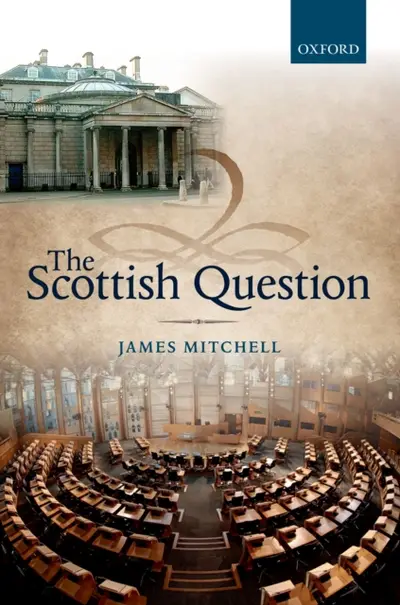
Over half a century ago, a leading commentator suggested that Scotland was very unusual in being a country which was, in some sense at least, a nation but in no sense a state. He asked whether something 'so anomalous' could continue to exist in the modern world. The Scottish Question considers how Scotland has retained its sense of self, and how the country has changed against a backdrop of fundamental changes in society, economy, and the role of the state over the course of the union. The Scottish Question has been a shifting mix of linked issues and concerns including national identity; Scotland's constitutional status and structures of government; Scotland's distinctive party politics; and everyday public policy. In this volume, James Mitchell explores how these issues have interacted against a backdrop of these changes. He concludes that while the independence referendum may prove an important event, there can be no definitive answer to the Scottish Question. The Scottish Question offers a fresh interpretation of what has made Scotland distinctive and how this changed over time, drawing on an array of primary and secondary sources. It challenges a number of myths, including how radical Scottish politics has been, and suggests that an oppositional political culture was one of the most distinguishing features of Scottish politics in the twentieth century. A Scottish lobby, consisting of public and private bodies, became adept in making the case for more resources from the Treasury without facing up to some of Scotland's most deep-rooted problems.
Bibliographic data © Gardners Books Ltd.