PDF · English
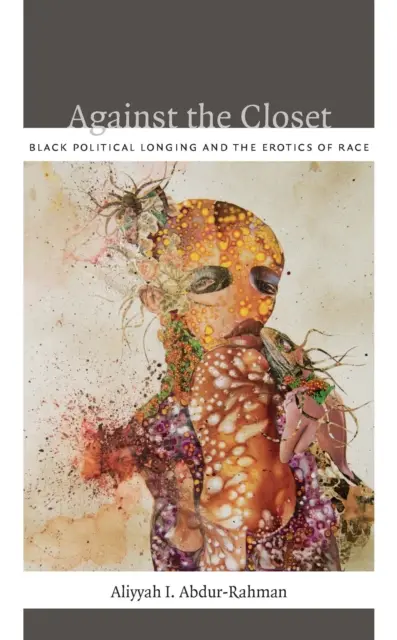
Against the Closet
Black Political Longing and the Erotics of Race
Price and availability
$41.99
Available in: Andorra, Austria, Australia, Belgium, Bulgaria, Canada, Switzerland, Cyprus, Czechia, Germany, Denmark, Estonia, Spain, Finland, France, United Kingdom, Guernsey, Greece, Croatia, Hungary, Ireland, Isle of Man, Iceland, Italy, Jersey, Japan, Liechtenstein, Lithuania, Luxembourg, Latvia, Monaco, Malta, Netherlands, Norway, Poland, Portugal, Romania, Sweden, Slovenia, Slovakia, San Marino, United States, Vatican City, South Africa
Stores: US, UK, Canada, EU, Australia.
Sign in to buyThe price is re-checked by the server before payment.
For personal use under the eBook licence.
- Format
- DRM
- Not stated by the publisher
- Language
- English
- Publisher
- Duke University Press
- Published
- 4 September 2012
- ISBN
- 9780822391883
- Subjects
- USA, English, Anthologies (non-poetry), Literary theory, Literary studies: c 1800 to c 1900, Literary studies: from c 1900 -, Literary studies: fiction, novelists & prose writers, Black & Asian studies, United States of America, USA, 2ACB, DNT, Literary theory, Literary studies: c 1800 to c 1900, Literary studies: c 1900 to c 2000, Literary studies: fiction, novelists and prose writers, JBSL
About this book
In Against the Closet, Aliyyah I. Abdur-Rahman interrogates and challenges cultural theorists' interpretations of sexual transgression in African American literature. She argues that, from the mid-nineteenth century through the twentieth, black writers used depictions of erotic transgression to contest popular theories of identity, pathology, national belonging, and racial difference in American culture. Connecting metaphors of sexual transgression to specific historical periods, Abdur-Rahman explains how tropes such as sadomasochism and incest illuminated the psychodynamics of particular racial injuries and suggested forms of social repair and political redress from the time of slavery, through post-Reconstruction and the civil rights and black power movements, to the late twentieth century.Abdur-Rahman brings black feminist, psychoanalytic, critical race, and poststructuralist theories to bear on literary genres from slave narratives to science fiction. Analyzing works by African American writers, including Frederick Douglass, Pauline Hopkins, Harriet Jacobs, James Baldwin, and Octavia Butler, she shows how literary representations of transgressive sexuality expressed the longings of African Americans for individual and collective freedom. Abdur-Rahman contends that those representations were fundamental to the development of African American forms of literary expression and modes of political intervention and cultural self-fashioning.
Bibliographic data © Gardners Books Ltd.